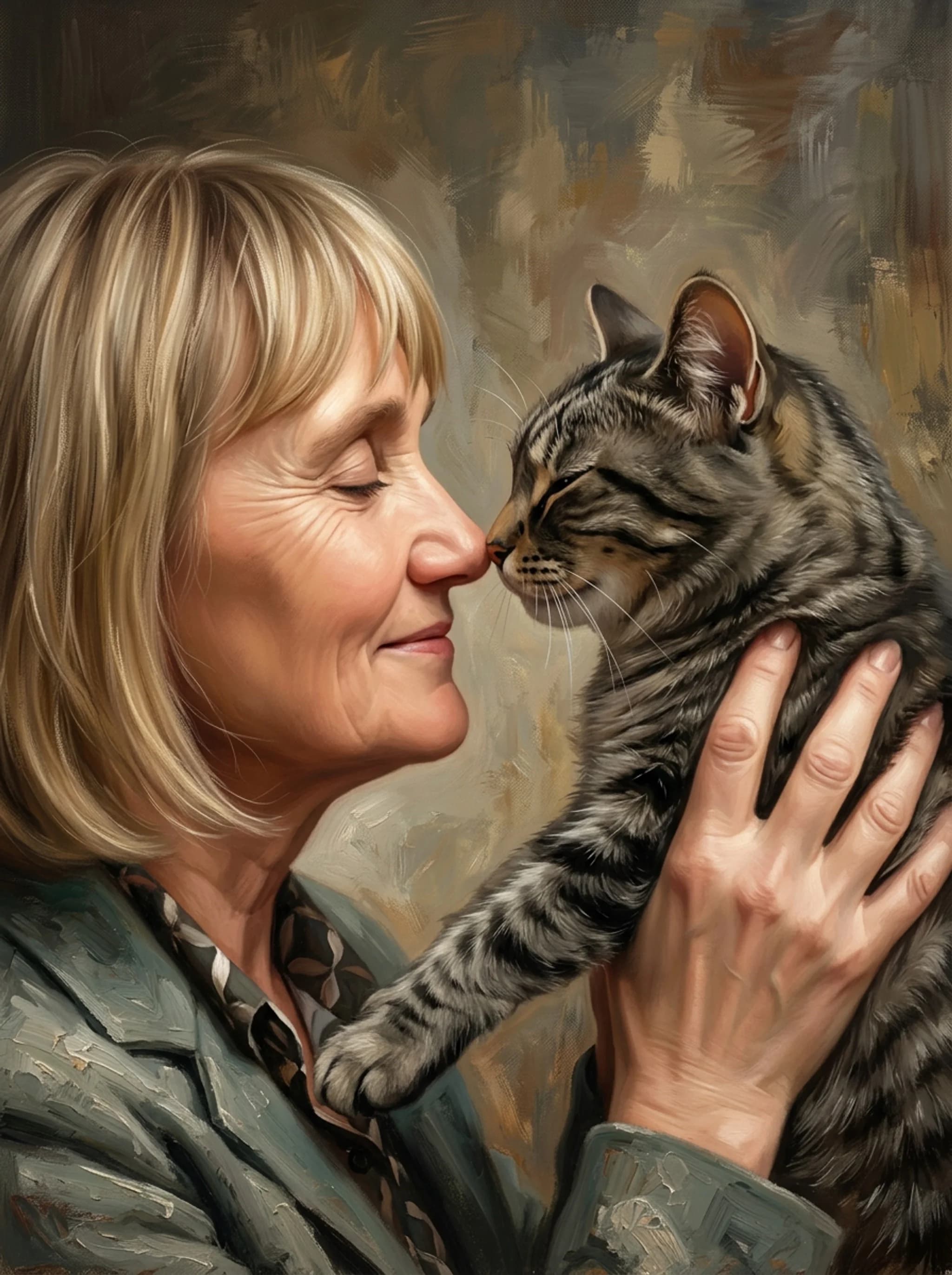
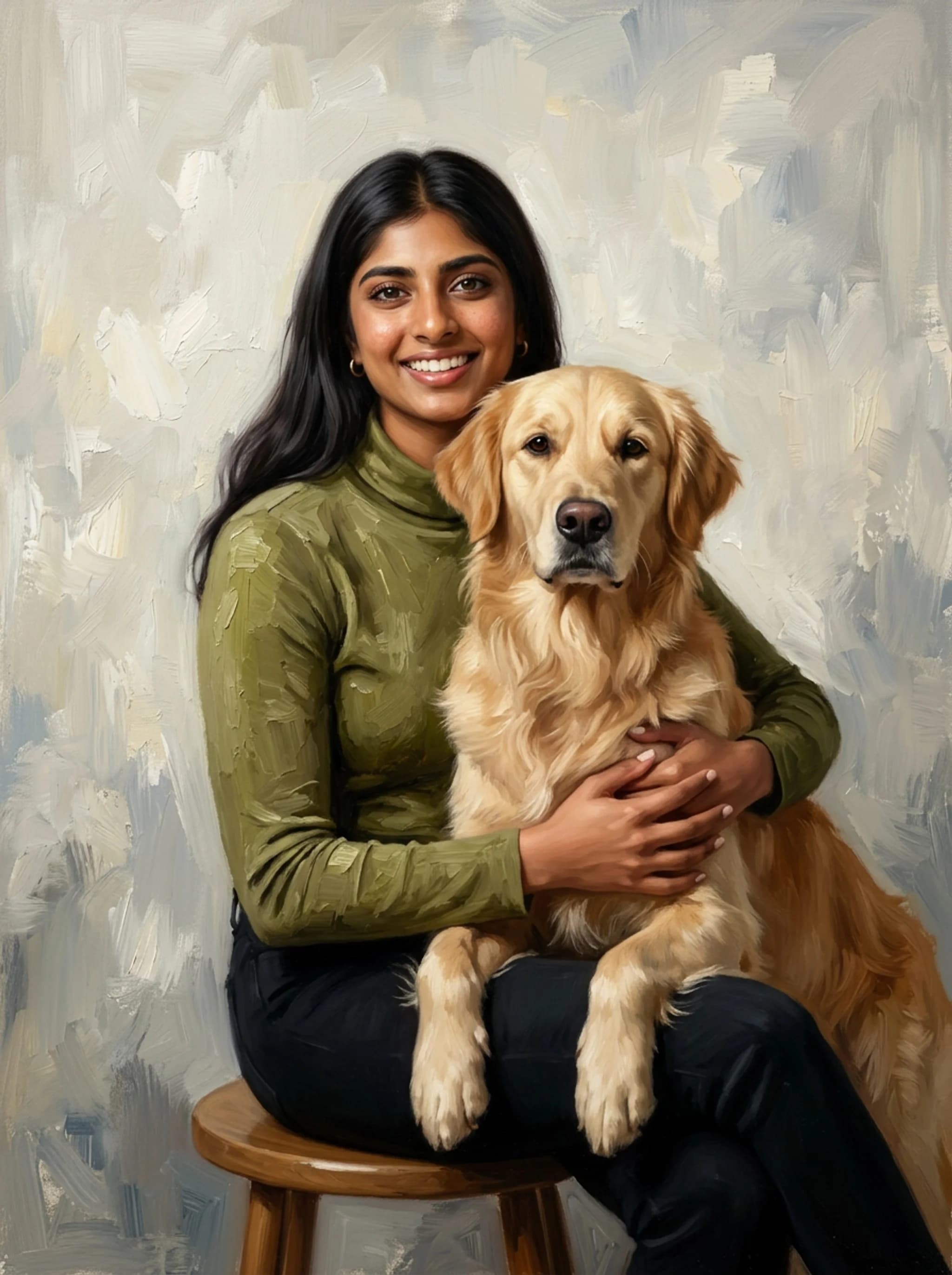
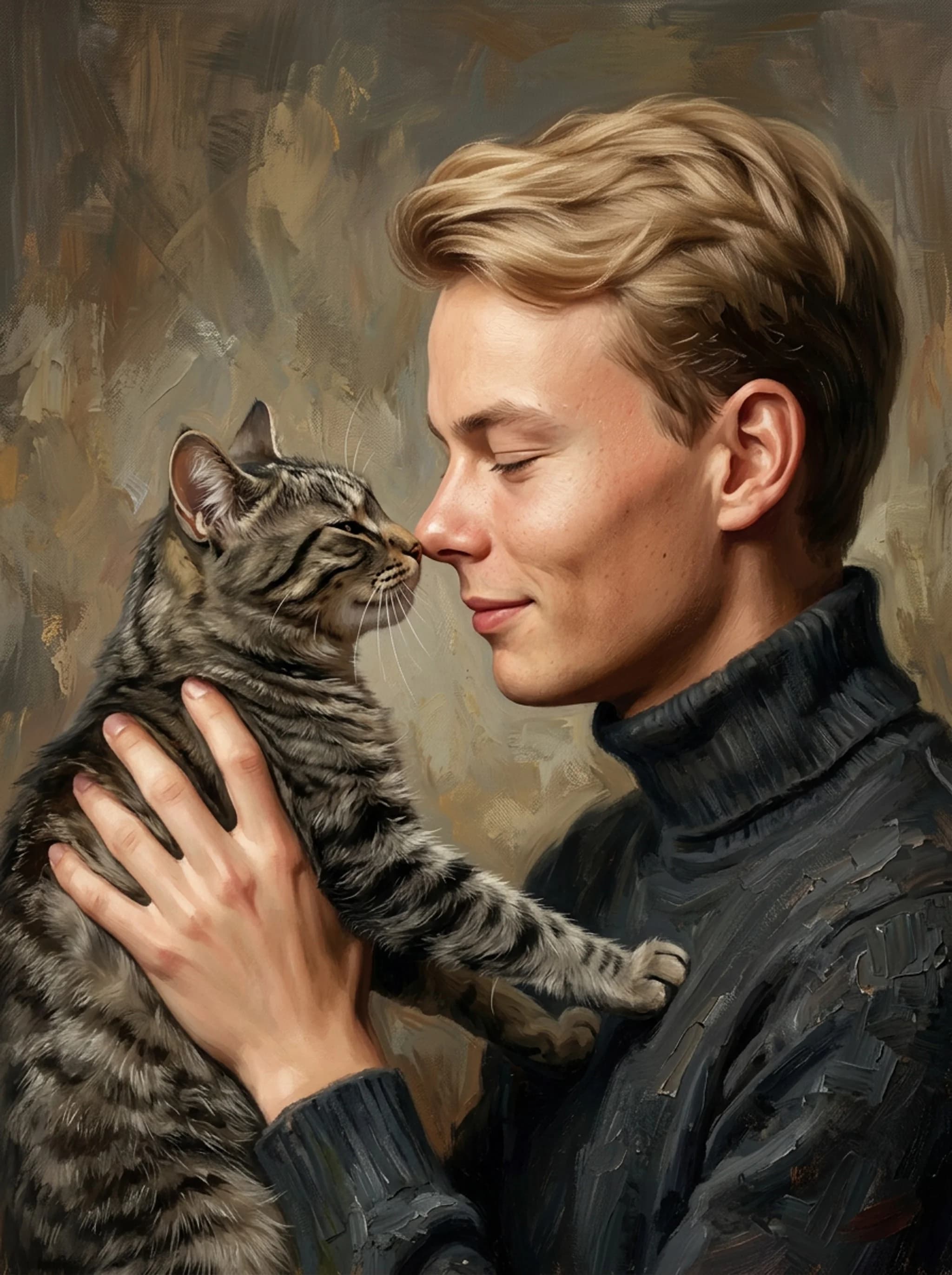
You are staring at hundreds of photos on your phone, trying to pick the one image that captures the soul of a companion who is no longer here. Losing a pet leaves an empty corner in your home that generic store-bought items cannot fill. A personalized pet remembrance painting turns raw grief into a permanent, comforting physical tribute. At Nobly, we create custom portraits that look like real paintings of people with their pets, translating cherished snapshots into enduring digital and canvas artwork that honors your bond.
Pet memorial search interest and commissioning intent
| What people actually search | Intent |
|---|
| personalized pet memorial painting | Topic |
| pet memorial photo ideas | Topic |
| pet memorial ideas | Topic |
| pet memorial wording ideas | Topic |
| personalized memorial gift ideas | Topic |
| personalized memorial gifts near me | Topic |
| personalized pet remembrance gifts | Topic |
| personalized pet remembrance | Topic |
| personalized pet remembrance ornament | Topic |
| personalized pet remembrance jewelry | Topic |
Search volume patterns and buyer intent based on current web sources, checked at publication.
How do you choose the right technique for a personalized pet remembrance painting?
To choose the right technique for a personalized pet remembrance painting, evaluate whether you want a 100% physical oil or acrylic painting, an artist-rendered digital painting printed on archival canvas, or a simple graphic illustration. Physical oils provide deep texture, while digital fine art offers faster proofing and precise likeness control without degrading over time. The memorial art market is crowded with options ranging from ten-dollar automated photo filters to multi-thousand-dollar studio commissions. If you want tactile brush marks you can feel with your fingers, traditional oils or acrylics applied to heavy linen are your best route. If you want an authentic painted look with perfect facial proportions, custom digital fine art painted stroke by stroke on a graphics tablet delivers remarkable fidelity. What you want to avoid is paying fine-art prices for automated algorithmic filters that simply blur a photo without artistic human judgment.
Practical rule: Avoid automated app filters: look for brushstroke definition around the eyes and muzzle to verify human artist involvement.
Digital filter prints versus genuine hand-rendered artwork
Many commercial vendors take your uploaded image, run it through an automated Photoshop action, and slap it onto thin polyester canvas. You can spot these instantly: the whiskers look smudged, the eyes retain harsh digital camera reflections, and the fur edges look like plastic cutouts. Real memorial artists, whether working with physical brushes or digital styluses, reconstruct the pet's anatomy from the ground up. Brands like West & Willow and Crown & Paw focus heavily on graphic or costume-based templates. In contrast, studios like Paint Your Life offer physical paint-on-canvas options. Hybrid digital painting studios deliver the middle ground: human artists painting digitally to match traditional oil aesthetics, giving you custom revisions before anything goes to print. You can read more about evaluating these mediums in our guide to choosing a personalized pet owner portrait.
Archival longevity standards and lightfast pigment ratings
A memorial painting should outlive its owner. When buying a physical painting, verify that the artist uses fine art paints meeting the ASTM D4303 Standard for lightfastness. Brands like Winsor & Newton produce pigments rated Lightfastness I, meaning they show no perceptible color shift for over 50 years under standard gallery lighting. For canvas prints of digital memorial paintings, demand Giclée printing with pigmented inks like Epson UltraChrome K3 Inks on acid-free, 100% cotton canvas. Cheap dye-based inks fade to sickly cyan or yellow within five years of exposure to natural window light. Archival prints paired with a protective topcoat will keep your pet's portrait vibrant across decades.
When to choose hybrid hand-finished digital portraiture
Hybrid digital fine art gives you the best balance of speed, cost, and custom composition. If you want to see a digital proof and request adjustments to your dog's ear tilt or cat's eye color before production, digital rendering is ideal. It removes the stress of paying upfront for an oil painting that might arrive with an inaccurate facial expression. Once the digital artwork is perfected, printing it onto archival canvas with professional texture replication gives you the presence of an oil painting on your wall without the multi-month studio wait times.
How can artists reconstruct paintings from low-quality or old photos?
Artists reconstruct low-quality memorial paintings by analyzing anatomical structure, eye reflection patterns, and fur grain from secondary reference images to rebuild lost detail. They correct washed-out direct flash glare, sharpen blurred features, and combine subjects from completely separate photographs into one cohesive, beautifully lit scene with unified perspective. Most pet owners do not have high-resolution studio portraits of their deceased pets. Instead, they have grainy flip-phone photos from 2012, underexposed snapshots under living room lamps, or photos where direct flash turned their dog's eyes into bright green circles. An experienced portrait artist treats poor photos as raw reference points rather than direct stencils, restoring life where the camera failed. If you have a collection of imperfect candid shots, commissioning personalized portraits that look like real paintings allows an artist to stitch those memories together into a single, lifelike composition.
Practical rule: Provide 2 to 4 supplementary photos alongside your main image so the artist can cross-reference true eye color and coat markings.
Fixing harsh flash glare and low-resolution snapshots
Direct camera flash destroys the natural depth of an animal's face, flattening the bridge of the nose and bleaching out subtle coat patterns. Skilled portrait artists rebuild these tonal values manually. They sample darker midtones from adjacent areas and use anatomical knowledge of canine and feline skull structures to restore realistic shadow contours. For low-resolution images, the artist does not use generic AI upscaling, which often creates waxy, alien-looking fur. Instead, they hand-paint individual hair groups, defining the sharp edges around the muzzle, ears, and whiskers while preserving the distinctive quirks that made your pet recognizable.
Combining separate photos into a cohesive multi-pet portrait
One of the most common memorial requests is showing two or three pets together who never met in real life, or who passed away years apart. You cannot simply cut and paste these images together without them looking disjointed due to mismatched lighting angles, camera heights, and color temperatures. A trained artist establishes a single synthetic light source across the entire canvas. They match the shadow cast by each animal, normalize their physical scale based on shoulder height, and align their eye lines so the final piece looks like they sat together for a single session.
What memorial features make a personalized tribute truly meaningful?
Meaningful memorial features include cremated ash infusion into paint layers, custom atmospheric backgrounds that evoke a favorite shared place, and understated typography with dates or epitaphs. These thoughtful personal touches transform standard pet artwork into an intimate sanctuary piece that specifically reflects the emotional weight of your shared bond. Memorializing an animal is deeply personal, and the artwork should reflect more than just their physical appearance. Some pet parents find profound comfort in incorporating tangible physical elements into the piece, while others prefer subtle textual tributes or specific environmental settings that tell their shared story. For broader context on selecting meaningful tributes, explore our guide on memorial gifts for pet loss. > A great pet memorial painting does not just capture how your pet looked; it captures the specific feeling of resting your hand on their head.
Practical rule: Keep memorial text below 10 percent of the total canvas area to keep the artistic portrait as the visual focal point.
Infusing pet cremation ashes into fine art mediums
Cremation art is a specialized memorial technique where a micro-portion of pet cremains is permanently sealed within the painting. The process requires careful studio safety protocols. The artist takes roughly one-eighth of a teaspoon of fine ash, sifts it, and mulls it directly into an acrylic medium or heavy oil binder before applying it as a textured glaze or foundational underlayer. Once cured, the ash becomes an integral part of the pigment layer. If you commission an ash-infused physical piece on Etsy or through independent studio artists, ensure they apply a sealing coat like Liquitex Professional Varnish to lock the layer beneath a permanent UV-resistant barrier.
Typography rules for memorial dates, names, and epitaphs
Adding names, birth years, or rainbow bridge quotes can easily overwhelm a painting if handled incorrectly. Avoid large, centered bold fonts that look like greeting card text. The most tasteful memorial paintings place the pet's name in a delicate, understated serif or clean sans-serif typeface in the bottom corner, mimicking an artist signature. Keep color contrast subtle. Instead of stark pure white text over a dark background, use a muted ivory, warm gray, or a soft tone sampled directly from the pet's fur. If you include dates, format them simply (for example, '2011 - 2025') rather than adding full sentences that pull focus away from the portrait.
Market transparency benchmark: comparing top memorial portrait studios
Top memorial portrait studios vary dramatically across production models, turnaround times, and true artistic techniques, ranging from mass drop-shippers using automated filters to dedicated studios using human illustrators and physical painters. Understanding these backend differences helps you avoid overpaying for automated print-on-demand products disguised as handcrafted art. Based on current web sources checked at publication, here is how the primary custom pet memorial models compare across technique, turnaround latency, and average price brackets. | Studio Type | Typical Production Model | Real Technique | Average Turnaround | Best Use Case |
| :--- | :--- | :--- | :--- | :--- |
|---|
| Budget Filter Vendors | Drop-shipped overseas | Automated Photoshop action on polyester canvas | 5 to 10 days | Inexpensive novelty items |
| Graphic Pop-Art Studios | Hybrid digital print | Vector tracing over uploaded photo | 7 to 14 days | Modern, colorful aesthetic |
| Digital Fine Art Studios (e.g. Nobly) | Local/regional custom studio | Digital hand-painting on archival cotton canvas | 5 to 12 days | Authentic oil look with proof revisions |
| Pure Physical Oil Studios (e.g. Paint Your Life) | Overseas artist network | 100% physical oil paint on stretched canvas | 3 to 6 weeks | Heavy physical paint texture |
Practical rule: Check if a vendor offers unlimited proof revisions before physical printing to guarantee you are satisfied with the likeness.
The drop-shipping filter trap versus dedicated studio production
Dozens of storefronts pop up every month running heavy social media ad campaigns, only to route your order to third-party overseas printing factories. These providers rarely employ dedicated artists. They run automated edge-detection scripts that trace your photo, print it onto synthetic plastic-blend canvas, and ship it in a mailing tube. Dedicated studios maintain internal artistic standards, manage customer communication directly, and offer digital proofing. When evaluating a studio, look for transparent production details, real studio photography rather than digital mockups, and responsive support channels.
Managing commissioning deadlines for sympathy gifts
If you are purchasing a memorial painting as a sympathy gift for a friend or family member who just lost a pet, turnaround speed matters. Physical oil paintings require days or weeks simply to cure and dry before they can be safely packaged and shipped without smudging. Digital fine art printed on canvas offers a significantly faster turnaround, making it ideal for sympathy gifts where you want the recipient to receive comfort within a week or two of their loss rather than waiting two months for oil paint to cure.
How should you frame, display, and preserve your memorial artwork?
To frame, display, and preserve your memorial artwork, select archival framing materials with UV-filtering glass or an archival varnish, hang the piece away from direct sunlight, and position it in a quiet living space where it brings daily solace rather than overwhelming visual clutter. A memorial piece holds deep emotional weight, so how you present it in your home matters just as much as the painting process itself. Selecting the right frame elevates the artwork into an heirloom, while proper environmental protection guarantees that moisture, dust, and daylight will not degrade the pigments over time.
Practical rule: Never hang canvas art directly above heating vents or in high-humidity bathrooms to prevent canvas sagging and mold growth.
Protective varnishes and floating frame choices
For stretched canvas prints, floating frames in natural walnut, matte black, or brushed gold create a clean boundary that complements the artwork without touching the paint surface. If your portrait is a gallery-wrapped canvas, applying an archival topcoat like Liquitex Professional Varnish shields the surface against fingerprints, moisture, and dust. If you choose a framed paper fine art print, insist on acid-free matting and Tru-Vue conservation clear glass, which blocks 99 percent of UV rays to prevent paper yellowing and ink degradation.
Creating a comforting memorial display space
Place your pet's portrait in an area where you spent peaceful everyday moments together, such as near your favorite reading chair, above a quiet entryway table, or beside their favorite sunny spot. Many pet parents create a dedicated tribute nook by setting the portrait near their pet's collar, clay paw print, or memorial urn. Honoring a beloved pet with a personalized painting provides closure and keeps their memory vibrant in your home. When you are ready to commission a timeless tribute, explore the custom canvas options at Nobly to create a lifelike, artist-crafted memorial you will treasure forever.
FAQ
What is the best photo to submit for a personalized pet memorial painting?
The best photo is taken at your pet's eye level in natural daylight, showing clear eye color and distinct facial markings without heavy shadows or flash glare. If you only have older or low-resolution snapshots, provide several candid photos so the artist can cross-reference missing facial details.
Can you combine multiple pets who passed away at different times into one painting?
Yes, professional portrait artists can composite separate photos of different pets into a single painting. The artist manually harmonizes scale, lighting angles, and perspective so all pets appear naturally positioned beside one another.
How long does a custom pet memorial painting take to make and ship?
Digital fine art portraits typically take 5 to 12 business days from photo upload to canvas delivery, including time for proof approval. Pure physical oil paintings require 3 to 6 weeks due to the necessary drying and curing times for physical paint layers.
What is the difference between a digital filter portrait and a digital painted portrait?
A digital filter applies automated algorithmic blurring and contrast adjustments over a photo in seconds, resulting in flat, smudged fur. A digital painted portrait is rendered stroke by stroke by a human artist using a graphics tablet, creating genuine depth, accurate lighting, and lifelike texture.
Can pet ashes be incorporated into a canvas painting?
Yes, specialized cremation artists can mix a small amount of fine cremated ashes into an acrylic medium or oil glaze to paint directly onto the canvas. The layer is then sealed with an archival varnish to permanently protect and preserve the memorial.