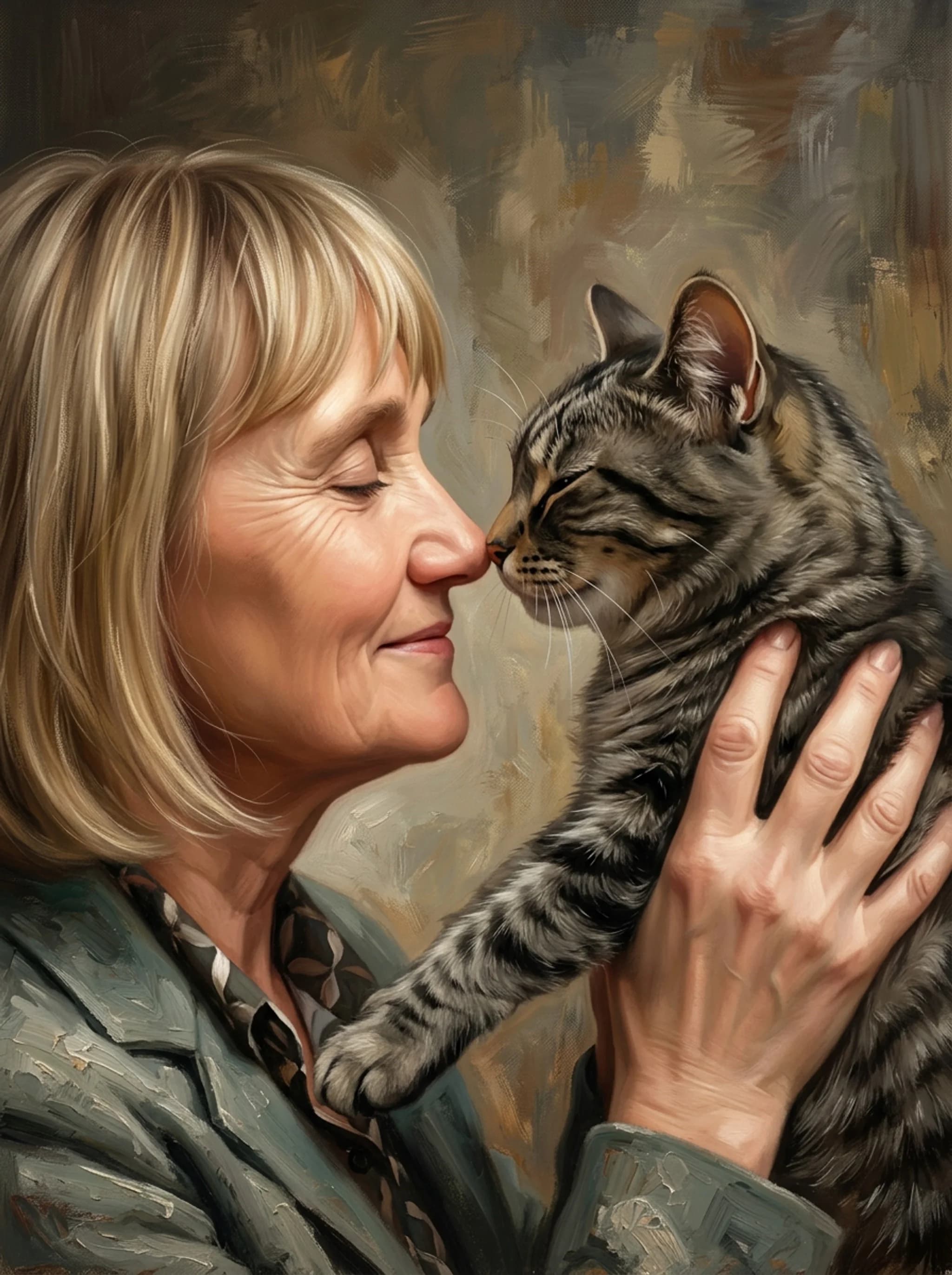
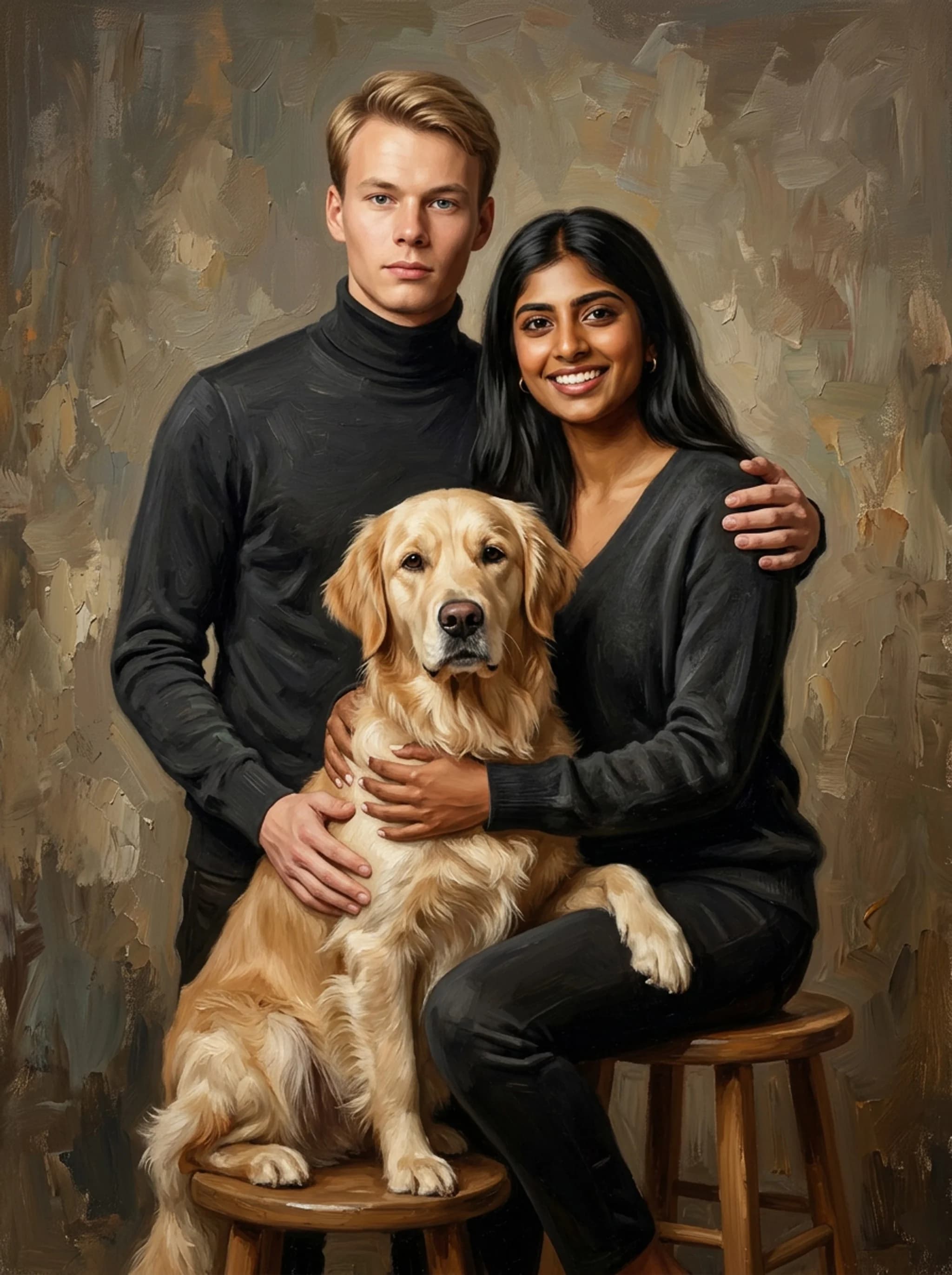
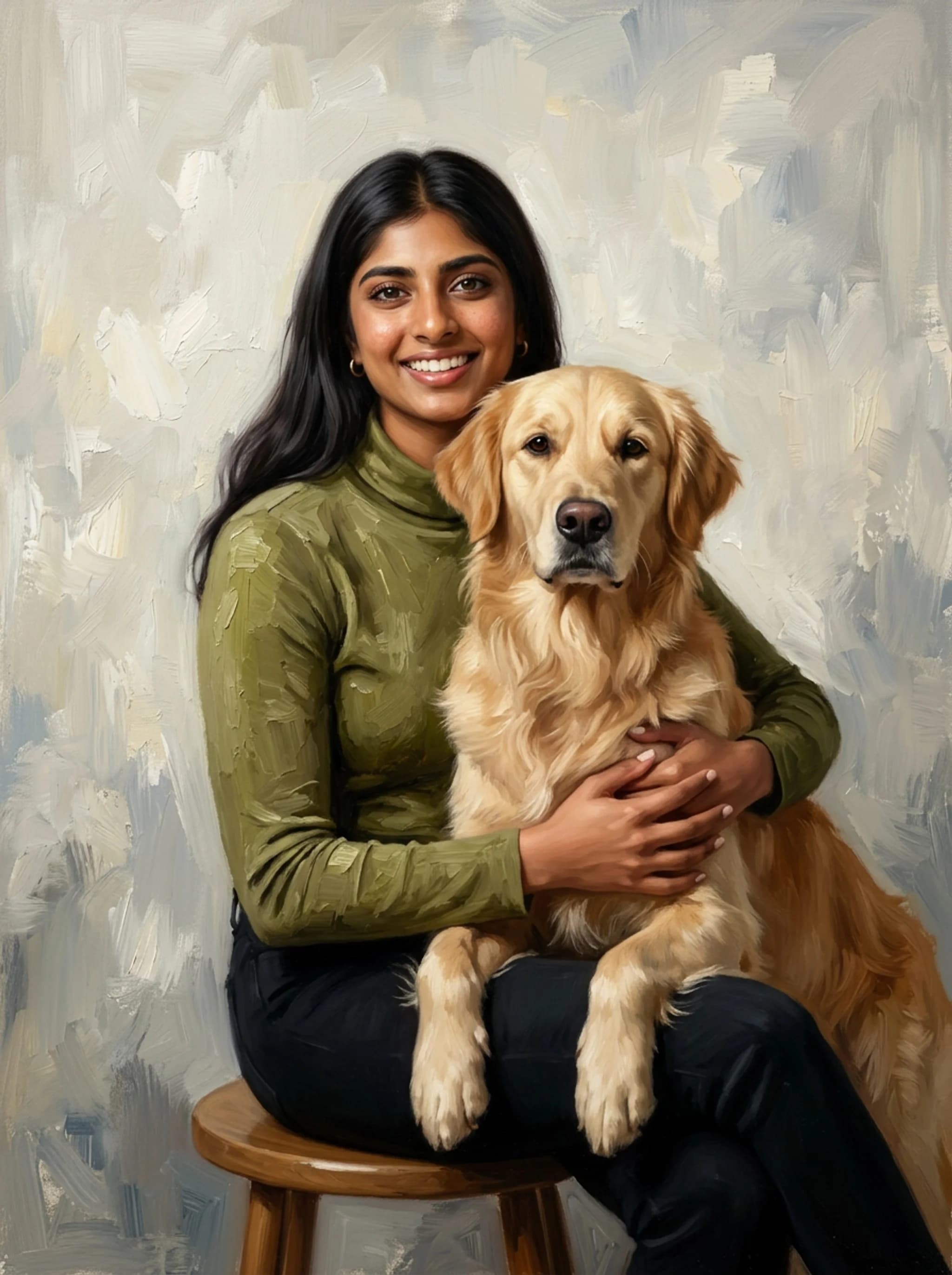
You are staring at a digital mockup of your dog on a flashy advertisement, wondering if the finished product will look like an heirloom or a cheap piece of shiny plastic in two years. Most custom canvas prints fade under natural sunlight, warp in humid rooms, or flatten your pet's fur into muddy grey patches. At Nobly, we turn everyday pet and family photos into painted canvas artwork that looks like a real oil painting, offered digitally or as archival canvas prints. Here is the technical playbook for evaluating fabrics, camera settings, and frame construction so your custom portrait lasts a lifetime.
Pet Portrait Canvas Brand Benchmark Table
What people actually search
Intent
custom pet portrait canvas
Topic
custom pet painting canvas
Topic
custom pet photo canvas
Topic
custom pet portrait painting canvas
Topic
pet portrait ideas
Topic
how much do pet portrait artists make
Question
Data aggregated from current web sources, checked at publication.
What makes a personalized pet portrait canvas last a lifetime?
Walk into any home with a five-year-old custom canvas print, and you will immediately notice whether they paid for archival cotton or cheap polyester. Settle for synthetic materials, and your display piece will slowly sag and yellow over time. A personalized pet portrait canvas lasts a lifetime when it uses 100% Cotton Duck Canvas (400 GSM) paired with pigment-based inks and FSC-Certified Kiln-Dried Stretcher Bars. Cheap poly-cotton blends and dye-based inks yellow, sag, and fade under normal living room UV exposure within three to five years. Canvas prints fail for predictable technical reasons. Most consumer print shops use thin polyester-cotton blends (under 300 GSM) sprayed with cheap plasticizers to keep raw materials cheap. Over time, ambient indoor humidity shifts cause synthetic fibers to stretch out unevenly. This leads to visible sagging across the stretcher frame. Meanwhile, dye-based inks break down under sunlight, washing out deep black fur coats into dull greys.
Practical rule: Never buy a canvas print on MDF stretcher bars or poly-blend fabrics below 350 GSM if you intend to hang it near natural window light.
Canvas composition: Poly-cotton blend vs 100% cotton duck canvas
Polyester canvas is synthetic, cheap, and easy to stretch over wooden frames in mass factory settings. However, polyester lacks natural fiber memory. When temperature and humidity fluctuate in a house, synthetic threads expand and never fully recover. This leaves waves and soft ripples across the face of your portrait. Natural 100% Cotton Duck Canvas (400 GSM) uses tightly woven, heavy-duty natural fibers. Cotton absorbs ink deep into its core rather than letting ink sit as a film on top. This creates rich matte depth in dark fur, crisp highlights, and long-term structural stability on the frame.
Ink technology: Pigment-based vs dye-based inks under UV light
Dye-based inks rely on liquid colorants dissolved in water. They print quickly and look vibrant straight out of the box, but light breaks down dye molecules quickly. Direct sunlight from a nearby window will ruin a dye-printed canvas in roughly two to three years. Professional printmakers use pigment-based inks like Epson UltraChrome GS3 Inks. Pigments are tiny microscopic color particles suspended in liquid. Under the Archival Giclée Print Standard, pigment-based prints withstand ambient indoor UV exposure for over 100 years without noticeable color shifting.
Frame engineering: Kiln-dried wood vs cheap MDF composite stretcher bars
The wooden frame behind your canvas is its spine. Budget manufacturers use Medium Density Fiberboard (MDF) squeezed together from glued sawdust. MDF absorbs air moisture like a sponge, causing the frame to warp, twist, and pull away from your wall within months. Look for FSC-Certified Kiln-Dried Stretcher Bars made from solid pine or spruce. Kiln-drying bakes wood down to an 8% to 12% internal moisture level. This prevents frame twisting and keeps your custom canvas pulled drum-tight for decades.
How do you choose between AI filters, digital stylus painting, and physical paint?
Most custom canvas companies hide their art production behind vague terms like 'digital hand-crafted artwork.' You deserve to know exactly how your image is transformed before paying for a print. Choosing the right art process depends on whether you want an automated image overlay, a detailed digital painting, or physical oil layers. AI filters apply instant stylized textures over photos, digital stylus painting builds stroke-by-stroke depth using drawing tablets, and physical oil painting applies real textured paint to fabric. If you upload a photo to an automated generator, you get a glorified photo filter printed onto fabric. It looks fine on a tiny smartphone screen, but at 16x20 inches, you will see blurred whiskers, plastic-looking eyes, and weird edge artifacts. A real artist using a digital stylus paints each brushstroke on a pressure-sensitive graphics tablet. They craft lighting, blend fur tones, and preserve your pet's personality. When you want to merge humans and pets into a single piece, art skill matters even more. Nobly artists take separate photos of family members and pets, painting them together into balanced scenes that look like classic oil paintings. If you want to understand how painted artwork handles complex subjects, read our detailed guide on Custom Pet Portrait Painting: A Founder's Playbook for Unfor.
Practical rule: Always demand a digital proof before printing to verify that fur gradients and shadows are painted rather than filter-cluttered.
Spotting the difference between an AI photo layer and true digital brushwork
Automated AI filters struggle with intricate details like fur patterns, wet nose reflections, and whiskers. When zoomed in, AI filters create smudged, plastic patches that look blurry on canvas. They simply smear pixels across an existing photo. True digital painting requires an artist to build brush layers manually. They render individual hair strands, adjust light direction across the forehead, and hand-paint catches of light in the eyes. This manual technique creates genuine artistic depth that translates cleanly to physical printing.
Why multi-subject compositions require human artist intervention
Combining two pets from separate photos, or adding a pet alongside family members, requires adjusting light angles, shadow depth, and scale. Automated software cannot balance color temperatures between a bright outdoor dog photo and an dim indoor human portrait. A skilled painter rebuilds shadows, matches ambient color values, and fixes visual balance so all subjects look like they stood in the same room together. You can see how this works in practice by checking our guide on Custom Pet Portraits From Photos: A Founder's Definitive Gui.
Your bond, painted in oil.
Upload one photo and see your portrait in 60 seconds. Free preview, no account needed.
How do you prepare pet photos to avoid optical distortion and muddy prints?
You can buy the finest archival cotton canvas on Earth, but a blurry smartphone snapshot will still produce a disappointing print. Preparing your source file properly prevents dull, pixelated results. To avoid distortion and muddy prints, shoot pet photos at eye level using a 50mm to 85mm lens equivalent to eliminate snout enlargement. Ensure a resolution of at least 300 DPI at full print size, and balance the histogram so dark fur retains shadow detail without blowing out highlights. Smartphone cameras default to wide-angle focal lengths (typically 24mm to 28mm equivalent). When you lean in close to take a picture of your dog or cat, wide-angle lenses stretch perspective. The nose looks massive while the ears retreat into the background. To capture accurate physical proportions, step back four to six feet and zoom in to roughly 2x optical range.
Practical rule: Take photos outdoors on an overcast day or near a large window, stepping back four feet and zooming in to lock correct snout proportions.
Camera focal length and perspective: Eliminating the 'giant snout' distortion
Close-up smartphone shots alter facial perspective. A wide lens distorts optical depth, making noses look comically large and flattening the skull. - Fix distortion: Step back four to six feet from your pet.
**Adjust optical zoom**: Zoom in to 2x or 3x on your phone screen to simulate a standard 50mm portrait lens.
**Get down on their level**: Kneel down so the camera lens lines up directly with your pet's eyes instead of pointing downward from above.
Resolution and DPI math for large format canvas printing
Print resolution determines sharpness. A standard phone photo might look crisp on a six-inch screen, but stretching that image across a 24x36 inch canvas drops pixel density significantly. Aim for a source photo that delivers 300 DPI (dots per inch) at your target print size. For a standard 16x20 inch canvas, your file should be at least 4800 x 6000 pixels. Anything below 150 DPI produces soft edges and blocky artifacts on woven canvas fabric.
Histogram adjustments and light balance for black and dark-furred pets
Black dogs and dark cats are notoriously hard to print. Camera sensors struggle to calculate exposure for dark fur, often turning black coats into featureless silhouette blobs. Photograph dark pets in bright, indirect natural light, such as a shaded porch or near a glass door. This creates highlights along the edges of their coat. Avoid direct bright sunlight, which creates harsh glares and buries body lines in pure dark shadows.
What canvas size and placement work best for your space?
Hanging an 8x10 canvas above a six-foot living room sofa looks like a postage stamp stuck to a billboard. Visual proportion dictates how artwork feels in a room. The ideal canvas size depends on viewing distance and wall proportion, where the artwork should span 60% to 75% of available open wall space or furniture width. For standard living rooms with a six-foot viewing distance, a 24x36 inch canvas offers optimal visual balance and readable fur detail. > A canvas print should fill roughly two-thirds of the wall space above furniture, viewed from a distance equal to twice the canvas diagonal. Sizing errors are the single biggest cause of buyer remorse. People pick a small canvas size to save thirty dollars, then realize it looks tiny on a large main wall. Your wall acts as a frame background. If your print occupies less than half the space above a console table or sofa, the visual balance breaks down completely. When hanging artwork alongside existing frames, consider how single pet portraits compare to multi-person layouts. You can learn more about arranging composite artwork in Your Definitive Guide to Canvas Family Portraits.
Practical rule: Measure the width of your couch or mantel, multiply by 0.66, and round to the nearest standard canvas frame width.
Viewing distance versus canvas size calculator
Choose canvas dimensions based on where people stand when viewing the display wall: - Small spaces (Hallways, desks): 8x10 or 11x14 inches; best viewed from 2 to 3 feet away.
**Medium focal points (Entryways, small mantels)**: 16x20 inches; best viewed from 4 to 5 feet away.
**Large statement walls (Above sofas, main living areas)**: 24x36 or 30x40 inches; best viewed from 6 to 10 feet away.
Gallery wall arrangements versus focal point statement pieces
If you have three pets, choosing between three smaller 11x14 canvases or one large 24x36 composite portrait changes the room dynamics. A gallery wall of separate prints feels relaxed and informal, while a single multi-pet statement canvas creates an elegant centerpiece.
How do major pet portrait canvas brands stack up on specs?
Browsing custom pet portrait sites can feel confusing due to flashy discount banners and vague marketing claims. Stripping away the hype reveals vast differences in fabric quality and frame construction. Major custom pet portrait brands vary widely in material specs, ranging from budget print shops using polyester and dye inks to premium studios offering 100% cotton canvas with pigment inks and wooden frames. Evaluating brands by ad spend tier, canvas composition, frame materials, and proofing guarantees reveals their true long-term value. We evaluated popular market choices to benchmark materials against cost. Print quality varies dramatically across price points. While budget printers cut costs on lightweight frames and synthetic fabrics, premium options invest in true museum-grade materials. | Brand / Vendor | Estimated Monthly Ad Spend Tier | Canvas Composition | Ink Type | Frame Material | Proofing Availability | Material Value Score (1-10) |
---
---
---
---
---
---
---
Crown & Paw
High ($100k+)
Poly-Cotton Blend
Dye-Based Ink
Composite / MDF
Yes
6.5
West & Willow
High ($100k+)
Polyester Blend
Dye / Pigment Hybrid
MDF Wood Frame
Yes
6.0
Paint Your Life
High ($100k+)
100% Cotton Canvas
Pigment-Based Ink
Solid Wood Stretcher
Yes
9.0
CanvasChamp
Very High ($200k+)
Standard Polyester
Dye-Based Ink
Thin MDF Frame
No (Extra Fee)
4.5
| Nobly | Mid-Tier | 100% Cotton Duck Canvas (400 GSM) | Epson UltraChrome GS3 Pigment Ink | FSC-Certified Kiln-Dried Wood | Yes (Included) | 9.5 | Selecting a provider comes down to trade-offs between speed, cost, and longevity. If you want a quick gift that lasts a year or two, low-cost polyester brands work fine. If you want a hand-painted piece on archival 400 GSM cotton mounted to real kiln-dried wood, inspect the technical specs before buying.
Practical rule: Skip any brand that does not explicitly guarantee 100% cotton fabric and solid wood kiln-dried stretcher bars in their product specifications.
Decoding marketing terms like 'archival grade' and 'gallery wrap'
Unscrupulous sellers use 'archival' as a loose marketing term without meeting industry standards. Real archival prints require acid-free 100% cotton fabric and pigment inks tested for 100-year lightfastness. Similarly, 'gallery wrap' simply means fabric folds around the sides of the wooden frame. It says nothing about whether the underlying frame is real kiln-dried wood or cheap fiberboard.
The true cost of cheap canvas prints: Replacement cycles and fading
A $40 discount canvas seems cheap until it sags and fades in three years, forcing you to replace it. Investing $120 to $200 in a well-constructed portrait made with archival pigment inks and cotton canvas means buying it once for life.
FAQ
How much do pet portrait artists make?
Pet portrait artists typically earn between $30,000 and $85,000 annually depending on their medium, pricing structure, and volume. Fine artists painting custom oil portraits charge $300 to $1,500 per piece, while digital artists using stylus software produce higher volume at $50 to $200 per portrait.
What is the best resolution for a custom pet portrait canvas?
The optimal resolution for printing a custom pet portrait canvas is 300 dots per inch (DPI) at full physical size. For a 16x20 inch print, this translates to a photograph that is at least 4800 x 6000 pixels.
What is the difference between polyester and cotton canvas for pet prints?
Cotton canvas is a natural woven fiber that absorbs pigment deeply, offering rich paint textures and superior stretch resistance over time. Polyester canvas is a synthetic fabric that can stretch out or sag in humid environments and tends to present a shiny, plastic finish.
Can I include multiple pets or family members on one pet photo canvas?
Yes, multiple pets and family members can be combined into a single cohesive canvas print through digital composition. Dedicated portrait services like Nobly combine individual photos into a single naturally lit painting draft before printing.
How do I clean and maintain a personalized pet portrait canvas?
Clean a personalized pet portrait canvas by dusting it gently with a dry, soft microfiber cloth or clean feather duster. Avoid using water, liquid cleaners, or spray solvents, which can dissolve protective coatings and smudge pigment inks.
Your bond, painted in oil.
Upload one photo and see your portrait in 60 seconds. Free preview, no account needed.