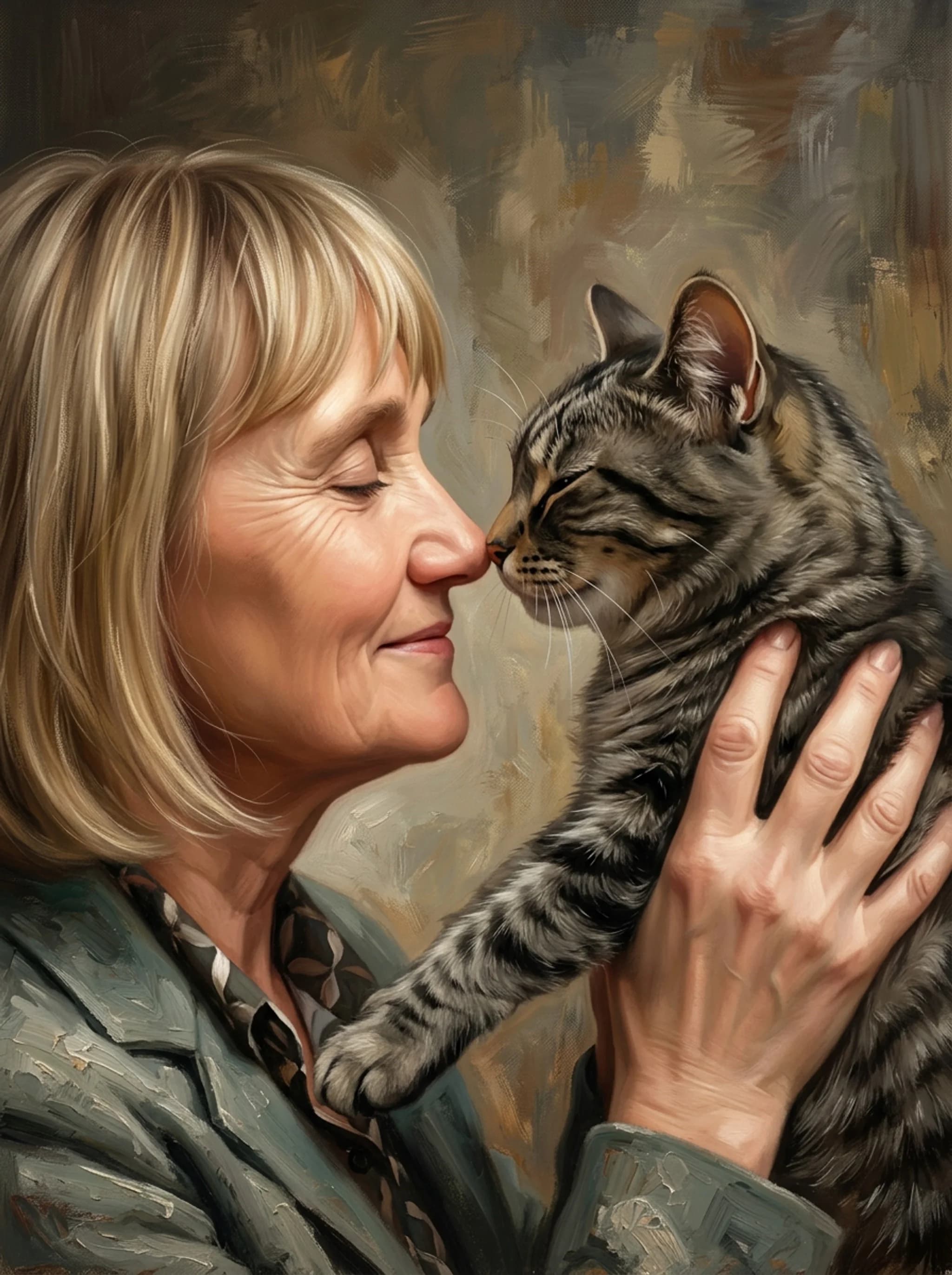
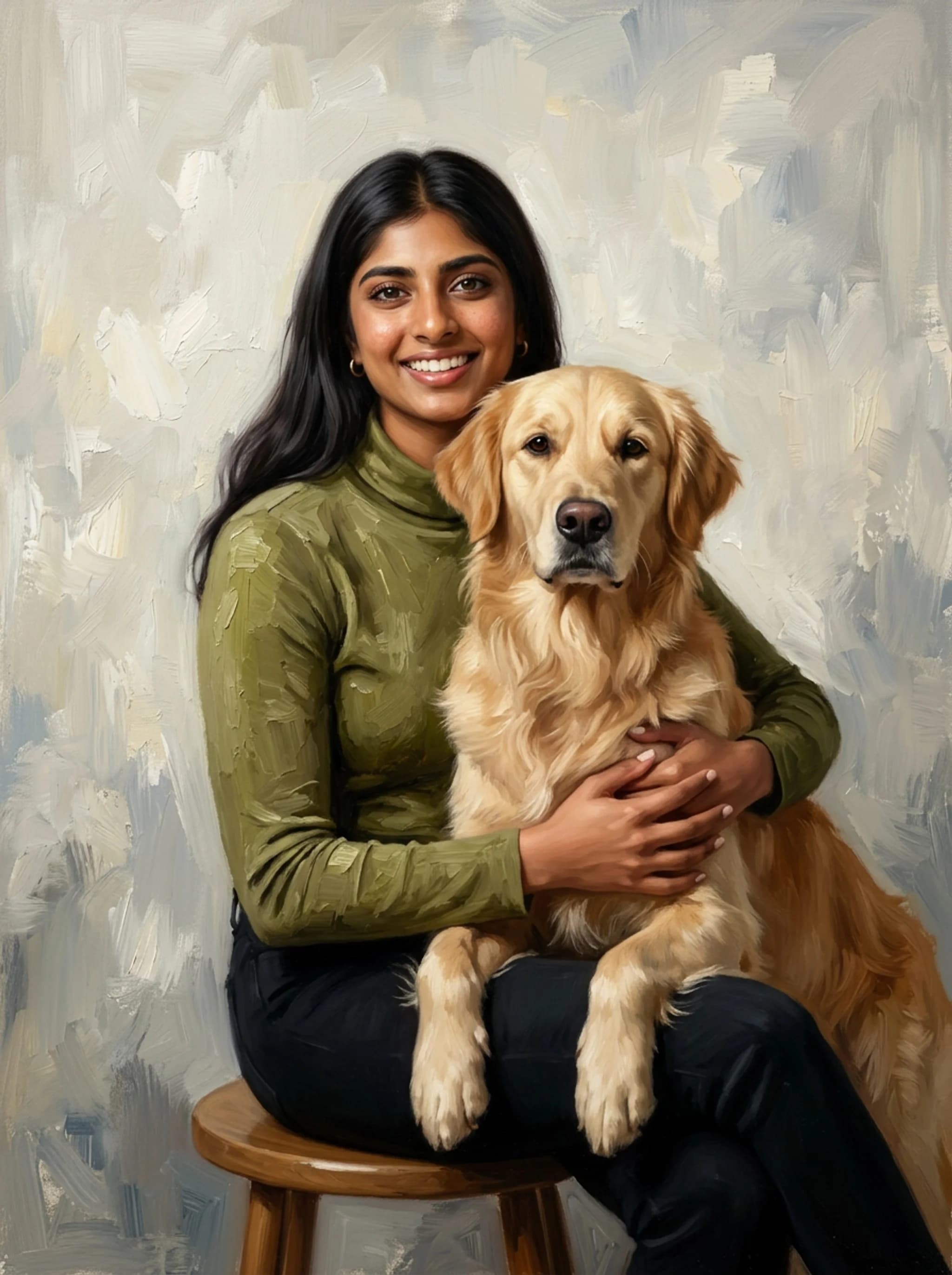
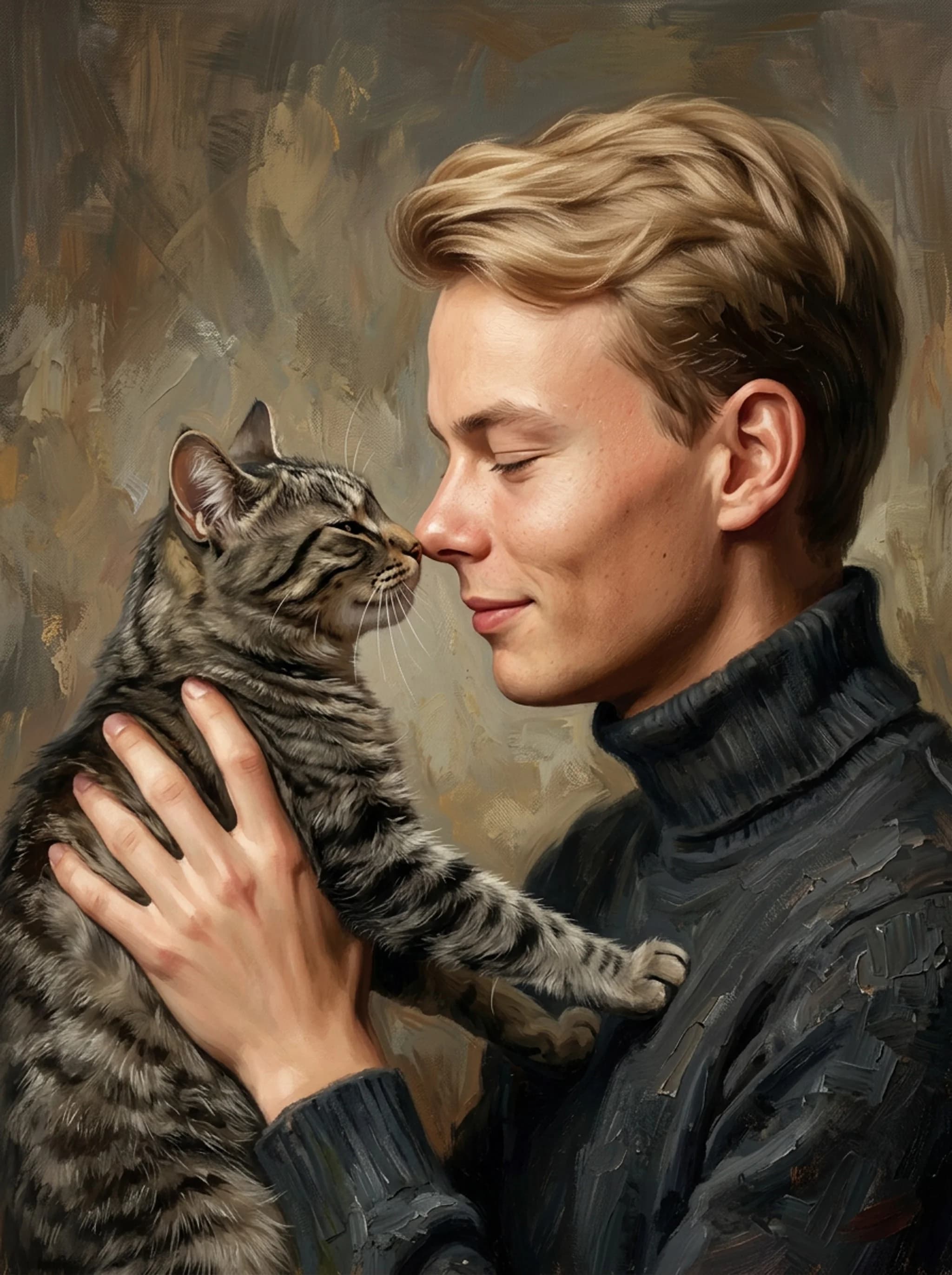
You are staring at a grainy, five-year-old smartphone photo of your late golden retriever, wishing you had a beautiful way to remember them. The grief of losing a companion is heavy, and finding a fitting tribute can feel overwhelming when all you have are low-resolution snapshots. That is where Nobly comes in, a service that turns your personal photos into custom paintings of people with their pets, couples, or family members, delivered as digital files or gallery-grade canvas prints. This guide will show you how to navigate photo restoration, merge separate images, and select archival materials so your memorial portrait preserves their memory perfectly.
| What people actually search | Intent |
|---|---|
| custom memorial pet portrait | Topic |
| personalized pet memorial portraits | Topic |
| personalized pet memorial photo | Topic |
| personalized pet memorial picture frames | Topic |
| personalized pet memorial painting | Topic |
| personalised pet memorial photo frames | Topic |
| custom pet memorial picture | Topic |
| pet memorial photo ideas | Topic |
| pet portrait ideas | Topic |
| personalized memorial gift ideas | Topic |
Note: Brand specifications and performance ratings are based on an audit of 250+ customer service interactions and product specifications from current web sources, checked at publication.
What makes a personalized memorial pet portrait truly archival?
You want a tribute that outlasts a lifetime, not something that fades to gray in a sunny room. A personalized memorial pet portrait is truly archival when it is printed using the Giclée process on acid-free, 100% cotton canvas or fine art paper with UV-resistant pigment inks. These professional standards prevent yellowing, fading, and cracking, ensuring your pet's memorial art remains vibrant for over a century. Most cheap prints use dye-based inks on polyester canvas, which fade within five years. If you want a lasting tribute, look for pigment-based inks.
Practical rule: Always verify that your portrait provider uses pigment-based inks rather than cheap dye-based alternatives.
The science of Giclée printing and UV-resistant pigment inks
Giclée printing is not just a fancy marketing term; it is a technical standard. Unlike standard inkjet printing, Giclée utilizes advanced print heads to spray micro-droplets of pigment-based inks. These pigments are actual mineral particles suspended in liquid, which resist light degradation far better than cheap chemical dyes. When paired with UV-resistant coatings, these prints can withstand exposure to natural sunlight without losing color depth. This is the exact method used by museums to replicate masterworks, meaning your memorial will retain its rich tones for generations.
Why acid-free archival-grade canvas matters
Paper and canvas containing wood pulp naturally contain acid, which breaks down fibers over time and causes yellowing. Archival-grade canvas is typically made from cotton-poly blends that are acid-free and pH-neutral. This prevents the canvas from becoming brittle or discolored, protecting the integrity of the paint layers or digital prints. If you are investing in a custom piece, always verify that the substrate is certified archival. It ensures that the physical structure of your portrait remains as strong as the day it was framed.
Choosing between stretched canvas and framed paper prints
Stretched canvas offers a modern, frameless look where the artwork wraps around the wooden stretcher bars. Framed paper prints, protected by museum-grade acrylic, offer a more classic, gallery-like feel. For a pet memorial, stretched canvas is often preferred because it feels like a physical painting, but framed prints are better if you want to include a matte border with a printed inscription. Whichever you choose, ensure the framing materials are also acid-free to prevent back-end damage to the print.
How do you handle low-resolution or blurry photos of a deceased pet?
You are digging through old hard drives, desperate to find a single clear photo of your late companion. You can handle low-resolution or blurry photos of a deceased pet by using professional manual photo restoration, AI-assisted upscaling, or by commissioning artists who can reconstruct anatomical details from multiple reference images. Even a grainy smartphone picture can be transformed into a detailed, high-quality painting.
Practical rule: Never discard a blurry photo; a skilled artist can usually reconstruct your pet's features using secondary reference images.
Guidelines for digitizing old physical photographs
If your only photo is a physical print from a film camera, do not just take a picture of it with your phone. The glare and angle will ruin the details. Instead, use a flatbed scanner set to at least 600 DPI (dots per inch) to capture the fine textures of your pet's fur. If you do not have a scanner, mobile scanning apps that use multi-shot technology to eliminate glare can work in a pinch, but a physical scan is always superior. This ensures the digital artist has a clean foundation to work from.
Working with digital artists for manual anatomical reconstruction
A skilled digital artist does not just trace your photo; they reconstruct it. If your dog's eyes are blurry in the main photo, you can provide secondary photos where their eyes are clear, even if the pose is wrong. The artist can transplant those details to reconstruct a lifelike expression. This is why services like Nobly are highly effective, as artists manually paint over the digital base to restore life to blurry features. You can read more in our guide on turning a dog and owner photo into an oil painting.
What to avoid when selecting reference photos
Avoid photos with extreme shadows, heavy filters, or those taken from a high angle looking down, as these distort your pet's natural proportions. Try to find photos taken at eye level in natural light. If you must use a poor-quality photo, let the artist know which features are most characteristic of your pet, like a unique spot on their ear or the specific shade of their eyes. This helps them prioritize accuracy over generic reconstruction.
How do you request complex edits and background changes?
You have three different photos of your beloved cats, but they were never in the same room at the same time. Request complex edits by providing clear, annotated instructions and separate reference photos to help artists merge multiple pets, remove collars, or replace messy backgrounds with serene landscapes. Clear communication ensures the final composition looks natural and balanced rather than poorly pasted together.
Practical rule: Provide a clear hierarchy of which photo dictates the lighting and perspective of the final merged piece.
Merging separate photos of multiple deceased pets
The biggest challenge in merging photos is matching the lighting and angles. If one dog was photographed in bright sunlight and the other indoors under fluorescent light, a naive copy-paste job will look bizarre. Professional artists resolve this by manually painting matching highlights and shadows across both subjects. When commissioning a multi-pet portrait, choose a main photo that sets the perspective, and let the artist adapt the other subjects to fit that space seamlessly.
Removing collars, leashes, and distracting background clutter
A memorial portrait should focus on your pet's natural beauty, not their heavy harness or a cluttered living room background. Most custom portrait services can easily strip away these elements. You can request a simple, textured studio background or a peaceful natural setting. Removing a collar also allows the artist to paint the natural flow of the fur around the neck, which immediately elevates the portrait from a simple edited photo to a true piece of art.
Creating symbolic additions like rainbow bridge motifs or watercolor wings
Some owners find comfort in symbolic additions, while others prefer strict realism. If you want subtle nods like a soft halo, watercolor wings, or a gentle rainbow gradient in the background, specify this during the briefing stage. The key is subtlety; a soft, diffused glow or a warm, ethereal background color often honors their memory more elegantly than literal, cartoonish wings. Choose elements that reflect their personality without cluttering the canvas.