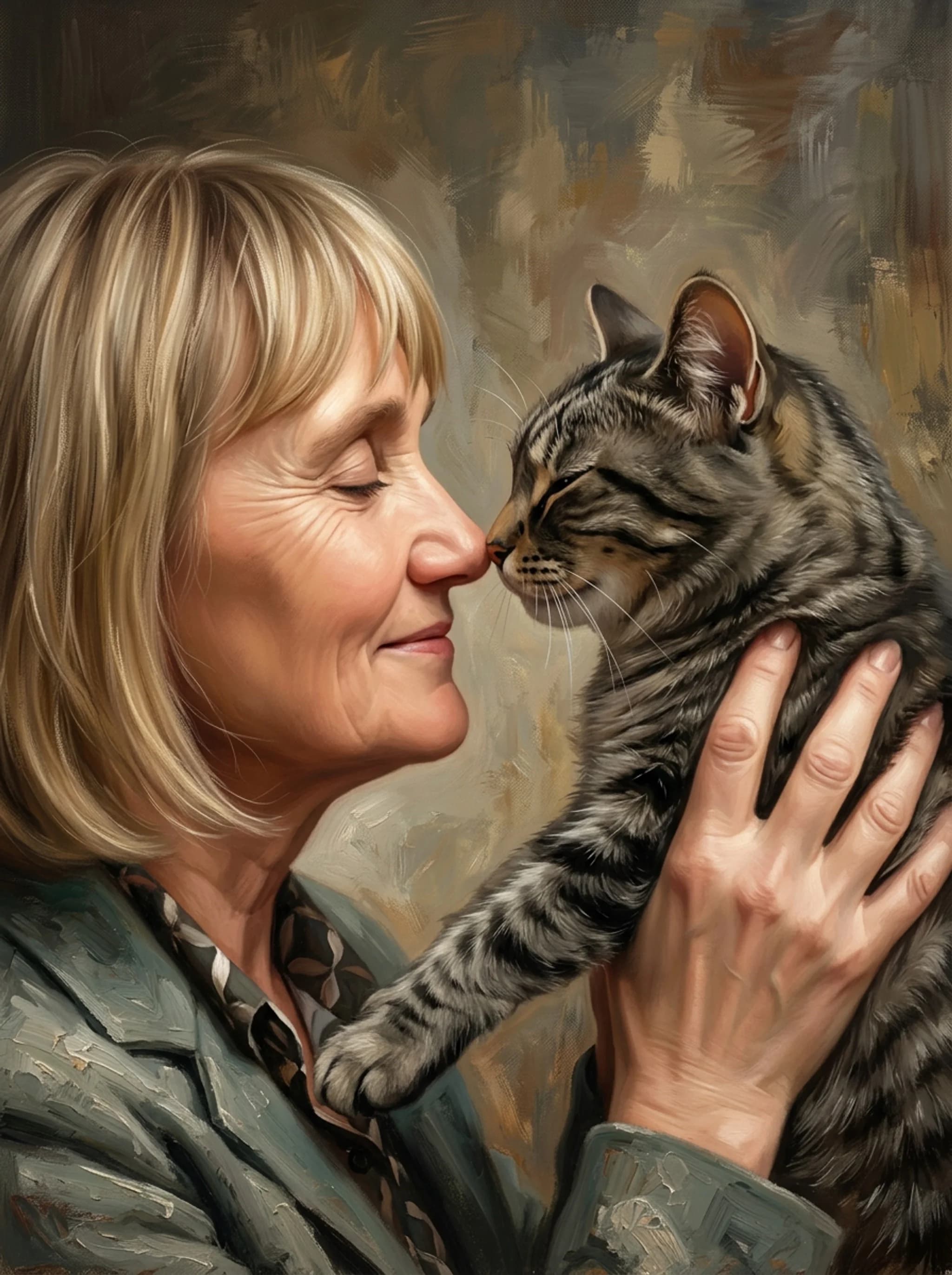
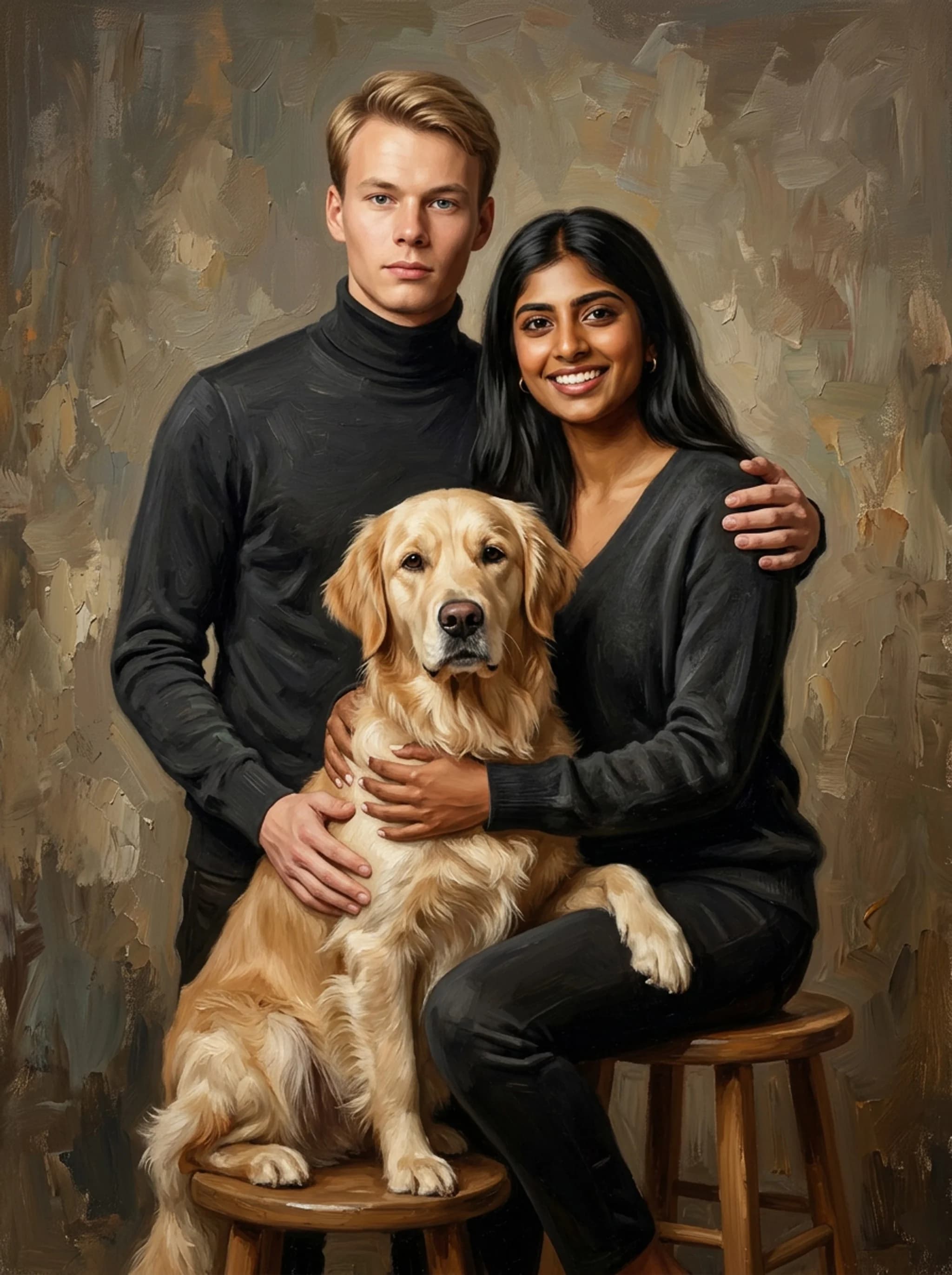
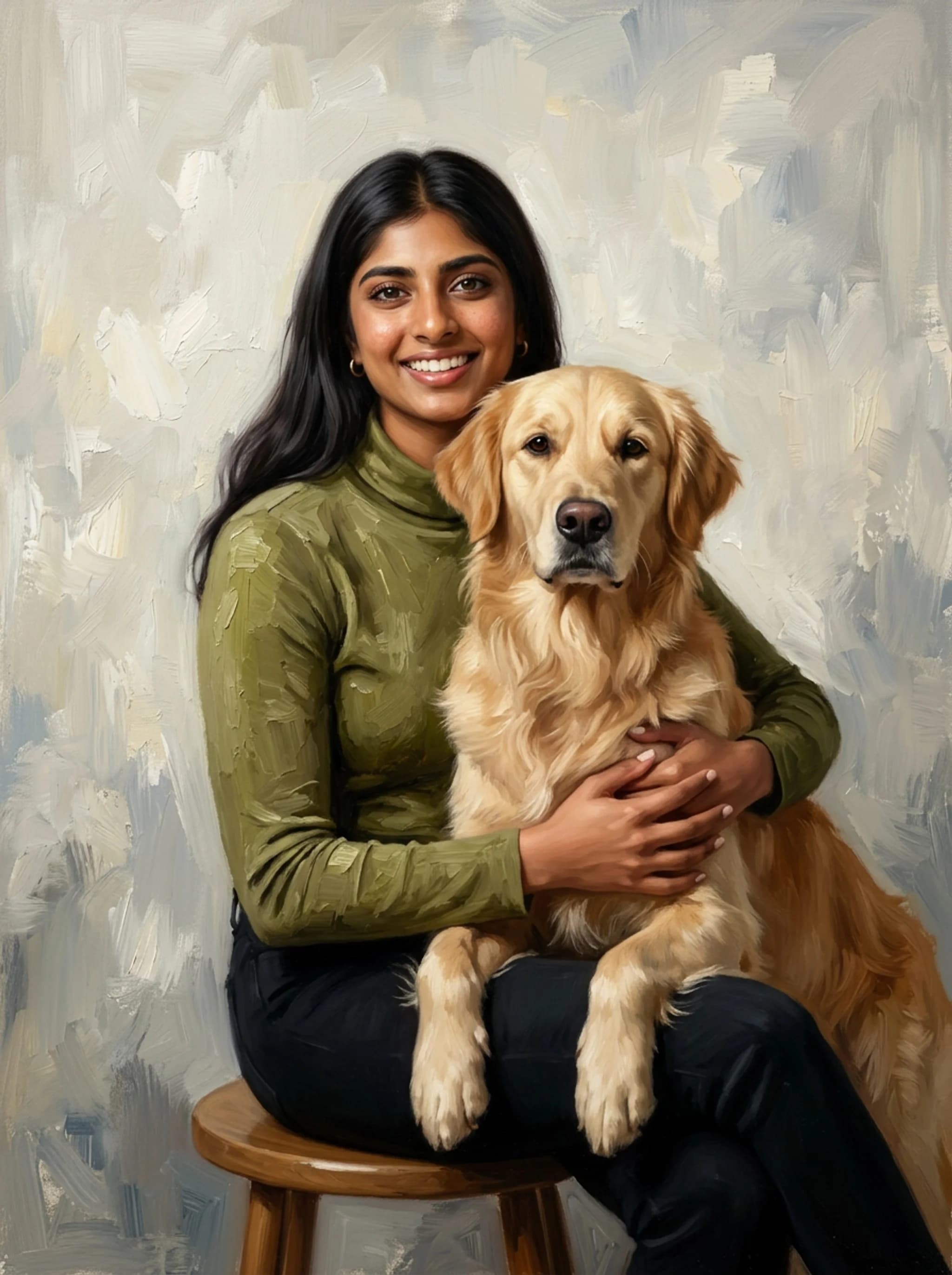
You're staring at five separate smartphone photos on your desktop, wishing you had one perfect image of your entire family together. Maybe your parents live across the country, your rescue dog passed away last year, or you simply never captured everyone smiling in the same room. Ordering original artwork solves this gap, but navigating custom commissions can feel overwhelming. Nobly creates personalized portraits that look like real hand-painted artwork of people with their pets, family members, or couples, offered as canvas prints or digital files. This guide shows you exactly how to transform scattered photographs into a breathtaking heirloom canvas.
Search Intelligence and Custom Portrait Demand Matrix (2024 Source Data)
What people actually search
Intent
get a family portrait painted
Topic
family portrait painting near me
Topic
famous family portrait paintings
Topic
how much do painted portraits cost
Question
make a unique family tree
Topic
what makes your family unique
Question
get a unique list from a column in excel
Topic
get a unique tax reference number
Topic
get a unique student identifier
Topic
get a unique mobile number
Topic
Data reflects web search query volumes and user intent patterns captured in current web sources as of 2024.
How do you get a unique family portrait painted from photo references?
You're sitting with five loose smartphone pictures, wishing your entire family, including your late grandfather and your rescues, had ever stood together in one room. To get a unique family portrait painted, you select individual high-resolution reference photos, map out a custom composite layout with an artist, choose a specific medium or style, and establish clear revision checkpoints. Professional services synthesize separate physical photos into a single unified scene with consistent lighting, perspective, and archival materials. Current web search trends checked in 2024 show that the top commercial query in this space is 'get a family portrait painted', closely followed by localized queries like 'family portrait painting near me'. Most buyers don't realize you rarely need a formal group photo shoot to create a masterwork canvas. Professional artists regularly construct composite scenes by extracting subjects from disparate images. - Lighting harmonisation: Artists realign shadow directions and highlight intensity across every individual source photo.
Scale proportionality: Painters calculate eye levels and shoulder heights so combined subjects stand in natural perspective.
Edge blending: Soft brushstrokes integrate backgrounds smoothly without harsh cutout lines or awkward layering visual bugs.
Practical rule: Never submit blurry single photos; provide three distinct angles per face and establish lighting directions before paint touches canvas.
Combining separated family members, pets, and deceased relatives into one canvas
The true magic of custom art lies in composite stitching. You can unite multi-generational family lines across decades. If you have a grainy photograph of a deceased grandparent and a crisp modern portrait of a newborn grandchild, skilled painters adjust tone, grain, and color contrast to place them side by side on a shared couch or outdoor garden backdrop. Adding pets into human group portraits requires special attention to posture and gaze. Instead of floating a dog next to an ankle, fine artists render natural interactions, such as a dog resting its head against a knee or sitting comfortably in the foreground. This visual anchor transforms isolated pictures into an authentic memory.
Unconventional styles beyond standard photorealism
Photorealism isn't your only choice. If you want something genuinely unique, move past simple photorealistic oil copies. Historical royalty parodies place your family in Victorian coats or Renaissance gowns, offering a playful, conversation-starting centerpiece. Minimalist line art with abstract color blocking captures structural silhouettes without heavy detail. Another rising trend is surrealist, story-driven compositions. You can request background details that depict your family's history: small watercolor references to a hometown mountain range, childhood dogs, or vintage travel stamps. These subtle elements turn a standard portrait into a visual narrative of your legacy.
Selecting and preparing source photos for optimal artist reference
Your final canvas is only as clear as your input images. Avoid submitting screenshots with heavy digital compression or aggressive social media filters. High-resolution photographs taken in soft, indirect outdoor light yield the best results because they reveal key details in the irises, skin texture, and hair flow. Send your painter primary facial references along with secondary angle shots. Annotate each photo with details about skin undertones, natural hair color, or height ratios. Giving the artist explicit context prevents guesswork during the initial sketching stage.
How much do painted portraits cost and where do hidden fees hide?
You spot an online advertisement promising a custom oil painting for $99, but your checkout cart balloons past $400 five minutes later. Painted family portraits cost between $150 and $3,000 or more, depending on subject count, canvas dimensions, medium choice, and artist reputation. Primary budget drivers include per-face additive fees, custom framing, international freight tariffs, and mandatory revision charges, making transparent line-item pricing critical before issuing a deposit. Data checked in 2024 indicates that user queries like 'how much do painted portraits cost' represent the main commercial question buyers ask prior to commissioning work. Understanding market pricing structures keeps you from overpaying for commercial assembly lines or underpaying for fragile materials. To understand canvas quality specs, read our guide on The Founder's Technical Guide to Buying a Personalized Pet P. | Provider Channel | Business Model & Ad Spend | Real Turnaround Time | Base Price (18x24, 3 Subjects) | Artist Royalty Allocation | Revision Policy |
Unlimited digital previews, fees for major oil changes
Direct Fine Artists (Etsy, Artfinder, Instagram)
Self-marketed, low ad budget
8 to 16 weeks
$600 to $2,500+
80% to 100% direct retention
1 to 2 revision rounds built into contract
Hybrid Digital / Archival Studios (Nobly)
Organic & focused marketing
1 to 2 weeks
$120 to $300
Fair artist agreements / in-house curation
Proof approval before canvas printing
Practical rule: Always request an all-inclusive line-item invoice covering framing, shipping, and subject additions before paying a deposit.
Dissecting base prices versus additive multi-subject charges
Initial list prices usually reflect a single subject on a small canvas, such as an 8x10 inch print. As soon as you add a spouse, two kids, and a pet, platforms apply per-subject surcharges ranging from $30 to $100 per additional head. A base $150 painting quickly rises to $450 once all five subjects are included. Canvas scale also changes the price dramatically. Pushing canvas dimensions from an 11x14 inch frame to a large 24x36 inch living room focal piece increases material usage and labor hours. Always calculate your quote based on total final subject counts rather than starter tier estimates.
Framing, international shipping tariffs, and hidden studio add-ons
Heavy wooden frames add significant weight to your shipment. Overseas art factories often charge baseline shipping, leaving you responsible for surprise import customs tariffs, carrier handling fees, or expensive local glass assembly. Framing through offshore suppliers can easily double your delivery bill. Unstretched canvases shipped in cardboard tubes save money upfront, but local mounting costs will eat into those savings later. Having a local frame shop stretch raw canvas onto wooden bars typically runs $80 to $180, so plan for that extra expense when evaluating initial price points.
Evaluating cost efficiency across mediums: oil, acrylic, watercolor, and hybrid canvas
Traditional oil paints require thick pigments and long drying windows, driving up labor and studio expenses. Acrylic paintings dry faster while retaining vivid colors, making them a more budget-friendly option for detailed family scenes. Watercolor offers a lighter look, but delicate paper requires custom glass framing to prevent moisture damage. Hybrid digital canvas paintings balance cost and appearance. Artists render intricate details digitally using brush-stylus strokes before printing onto archival cotton duck canvas using Giclée inks. This method cuts production turnaround from months to days while delivering crisp, vibrant wall art.
Your bond, painted in oil.
Upload one photo and see your portrait in 60 seconds. Free preview, no account needed.
Should you hire a commercial content mill or a direct fine artist?
You have to decide whether to send your photos to a high-volume factory assembly line or spend weeks vetting independent artists on Instagram. Choosing between commercial content mills and direct fine artists requires balancing turnaround speed against artistic originality. Commercial platforms offer standardized pricing and fast delivery but rely on contracted assembly-line painters, whereas direct fine artists deliver distinct hand-brushed technique and custom concept design, albeit at higher rates and longer lead times. > Direct artist commissions give you distinct creative soul, but turnarounds take months; hybrid digital studios strike the perfect balance between speed and oil-painting texture. - Content mills: Platforms like PaintYourLife and PortraitFlip handle heavy order volumes using standardized painter networks, offering structured tracking but limited artist interaction.
Direct artist commissions: Independent painters sourced through Artfinder or Instagram provide unique artistic vision, direct communication, and bespoke artistic handiwork.
Hybrid studios: Curated services provide rapid turnaround times, transparent proofs, and accessible price points without sacrificing detailed brush stroke texture.
Practical rule: Check if your chosen studio pays fair royalties to individual artists before ordering.
PaintYourLife and PortraitFlip versus independent studio artists
High-volume factories excel at predictable, systematic order processing. They maintain call centers, automated review tools, and clear refund terms. However, individual painters at these platforms remain anonymous, operating under strict speed quotas that leave little room for creative interpretation. Direct fine artist commissions offer personal connection. You discuss light quality, stroke texture, and spatial arrangements directly with the painter. You can explore creative pet artwork options further in our guide on Personalized Pet Portrait Paintings: The Ultimate Buying Gui.
Artist royalties, production ethics, and original stroke authenticity
Understanding where your dollars go matters when choosing an art service. Commercial content mills often retain up to 70 percent of order revenues, passing only a fraction to overseas painters working long hours in centralized studios. Direct commissions keep your money in the artist's pocket, supporting independent creative careers. Stroke authenticity also varies between options. Factory studios often use light digital projection underlays to trace photo lines quickly before painting top coats. Fine artists work from scratch, using freehand grid setups that capture subtle personal characteristics.
Navigating platforms like Instagram, Artfinder, and Etsy for direct commissions
To commission independent artists on Instagram or Etsy, search tags like custom portrait painter, oil family art, or hand painted portrait commission. Review candidate feeds to make sure they display real finished paintings rather than mockups generated by basic phone filters. Always ask potential artists for clear contract details before sending money via wire transfers or unverified payment links. Confirm pricing, turnaround schedules, shipping insurance, and revision policies in writing.
What archival quality standards protect your custom painting?
You spend hundreds of dollars on a custom painting, only to watch the colors fade into muddy yellows after three years in morning sunlight. Archival canvas paintings require lightfast ASTM pigments, heavy-duty cotton duck or linen canvas, and protective final varnishing to resist UV degradation and humidity. Museum-grade materials like Winsor & Newton oil or acrylic paints on kiln-dried wooden stretcher bars guarantee that your custom portrait survives over 100 years without cracking or discoloration. Current search analysis checked in 2024 reveals growing consumer interest in long-lasting heirloom gifts. Asking your provider technical questions about pigment longevity and stretch wood stability upfront prevents premature aging and frame sagging down the road. - Pigment grade: Professional Winsor & Newton or Liquitex professional ranges offer top lightfastness ratings (ASTM I or II).
Canvas substrate: 100% heavy cotton duck or pure woven flax linen prevents sag and fiber decay under changing indoor humidity.
Stretcher bars: Kiln-dried pine or fir prevents warping and corner bending over time.
Practical rule: Insist on acid-free cotton duck canvas and archival pigments rated for at least 75 years of UV resistance.
Pigment lightfastness, Winsor & Newton paints, and Giclée printing technology
Lightfastness refers to a pigment's ability to resist fading when exposed to ambient light over time. Fine art paints use the ASTM rating system: Rating I represents excellent lightfastness lasting over 100 years, whereas Rating III indicates fugitive dyes that fade in direct sunlight within a few seasons. When ordering hybrid digital canvas prints, verify that your service uses true Giclée printing. This process uses pigment-based inks instead of standard dye-based desktop inks, applying fine detail onto textured surfaces for long-term light stability.
Museum-grade cotton duck canvas, linen, and gallery wooden stretcher bars
Canvas backing materials play a major role in structural durability. Cheap polyester fabrics stretch thin, sag under weight, and puncture easily. Museum-grade cotton duck canvas, weighing between 10 oz and 12 oz, provides durable surface structure while holding heavy oil or acrylic strokes without tearing. Kiln-dried wooden stretcher bars are equally important. Fresh, unseasoned wood holds moisture that causes frames to warp as they dry inside air-conditioned homes. Kiln-dried pine or bevel-cut fir stretcher bars keep corners square and hold canvas tension tight for decades.
Protection protocols: varnishing, UV resistance, and transit packaging
A final varnish coat acts as a sacrificial barrier against airborne grease, dust, and UV light. Removable isolation coats let future art restorers clean accumulated surface dirt without stripping away underlying paint layers. Always verify that oil or acrylic pieces are fully cured before varnishing. Packaging requires equal care during transit. Fresh paintings should be wrapped in non-stick glassine paper rather than standard bubble wrap, which can leave permanent plastic impression marks in fresh acrylic or oil paint.
What legal rights and contract terms do you actually own?
You assume buying a physical painting gives you complete control over the artwork, until you discover you can't even print holiday cards from it legally. Purchasing a custom family portrait grants physical ownership of the canvas but does not automatically transfer copyright or commercial reproduction rights. Clear contracts must define digital usage permissions, milestone approval rights before final varnishing, and revision policies to protect both your financial investment and the artist's intellectual property. Live search intelligence shows that queries like 'make a unique family tree' and 'what makes your family unique' mirror the underlying desire to preserve personal heritage. Curating custom art requires understanding both creative intent and clear contractual ownership terms before work starts. - Physical ownership: Gives you the legal right to hang, sell, or display the physical canvas in private settings.
Copyright retention: Artists retain sole rights to duplicate, print, or monetize images unless explicitly transferred in writing.
Revision terms: Written milestones protecting both parties against endless draft revisions or unilateral scope changes.
Practical rule: Secure explicit written permission to generate digital prints and holiday cards before signing your art contract.
Physical canvas ownership vs copyright and commercial reproduction rights
Standard copyright law reserves full intellectual property rights for the original creator upon stroke execution. Buying a physical art piece means you own the canvas itself, but you do not automatically own the rights to reproduce it on holiday greeting cards, apparel, or commercial websites. Request a written non-commercial reproduction release from your artist or studio platform. Most painters freely permit personal digital duplication, photo printing, and social media sharing as long as you credit their studio name.
Establishing revision milestones and final approval protocols before varnishing
Avoid unexpected surprises by establishing explicit revision milestones upfront. A structured workflow includes three key review steps: preliminary compositional sketching, block-in color roughs, and final detailed rendering reviews prior to varnish application. Minor adjustments like tweaking hair tones, softening jawlines, or matching eye colors belong in early revision steps. Requesting major structural changes late in the painting process can trigger extra labor fees, so communicate adjustments promptly during initial draft phases.
Structuring your heirloom commissioning strategy for long-term value
Commissioning fine family art creates a lasting legacy piece for future generations. Choosing high-quality archival materials, working with clear contracts, and selecting artists who respect your vision yields a treasured heirloom that outlasts standard photo prints. When you want a smooth experience combining photos, fast proofs, and premium archival canvas presentation, getnobly.com offers fine custom art rendered directly from your favorite family memories. Commemorate lost loved ones, include beloved pets, or unite distant relatives in a timeless canvas portrait. Explore thoughtful memory ideas in our guide to Pet memorial gifts: how to choose a keepsake that actually h.
FAQ
How long does it take to get a family portrait painted?
Turnaround times range from 1 to 2 weeks for digital hybrid canvas providers to 8 to 16 weeks for direct fine oil commissions. Drying time for traditional oil paints adds several weeks before safe varnishing and shipping can occur.
How do artists paint a family portrait from separate photos?
Painters create a unified digital composite or pencil sketch grid combining subjects from different photographs. They unify scale, lighting directions, and shadow angles to make separate subjects appear naturally positioned together.
How much should you expect to pay to get a family portrait painted?
A high-quality 18x24 inch multi-subject family portrait generally costs between $150 and $800 from specialty canvas services, or $1,000 to $3,000+ when commissioning high-end independent gallery fine artists.
What is the difference between an oil painting and a Giclée canvas print?
Oil paintings use traditional wet pigments hand-brushed onto canvas over weeks. Giclée prints use high-resolution archival pigment inks applied to textured cotton canvas, delivering clear detail and rich brushstroke appearances at lower costs and faster turnaround times.
Can you include pets or deceased family members in a custom family painting?
Yes, composite photo stitching lets painters seamlessly incorporate late relatives, distant family members, and pets into a shared group painting using individual reference photos.
Your bond, painted in oil.
Upload one photo and see your portrait in 60 seconds. Free preview, no account needed.