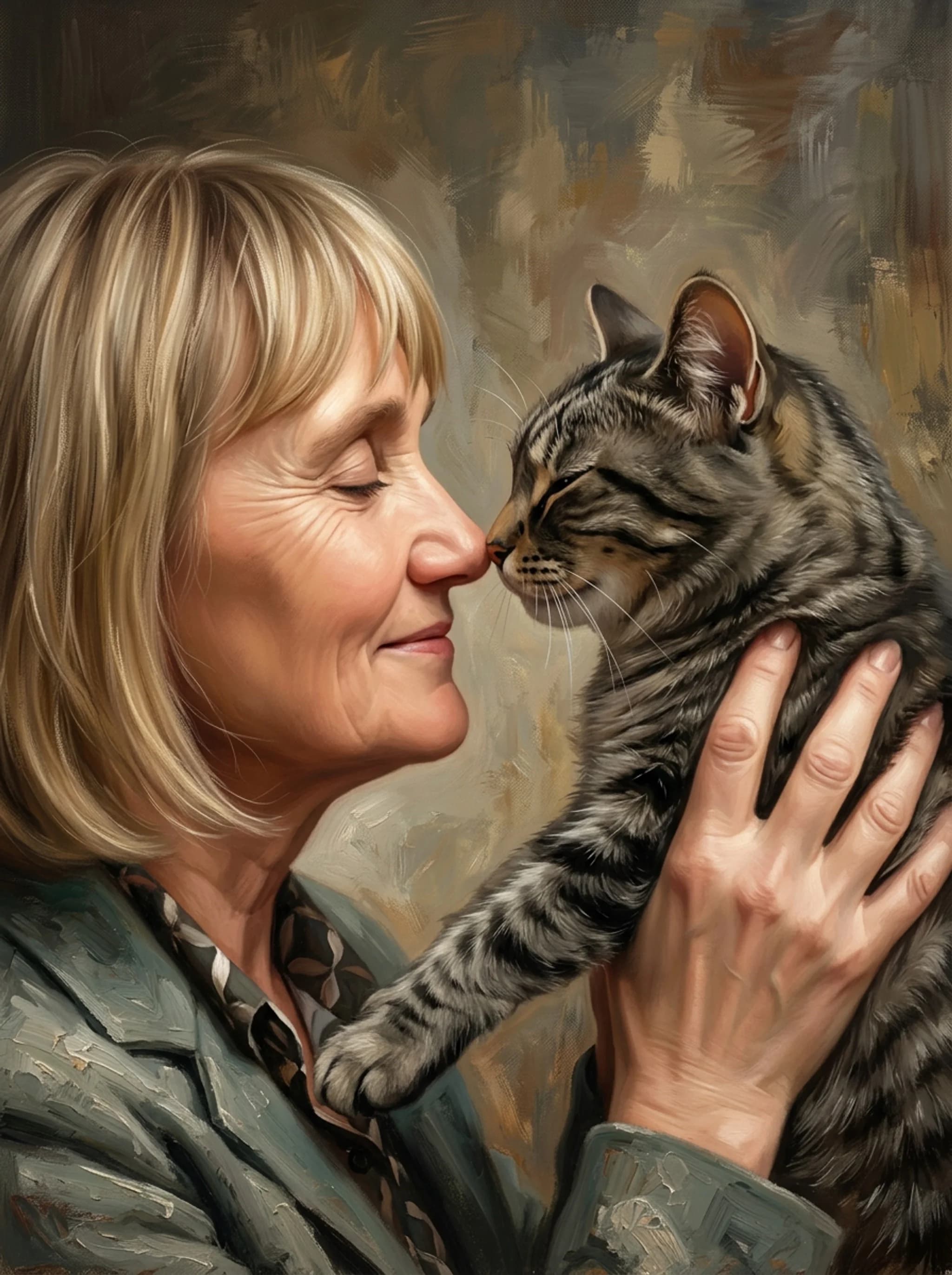
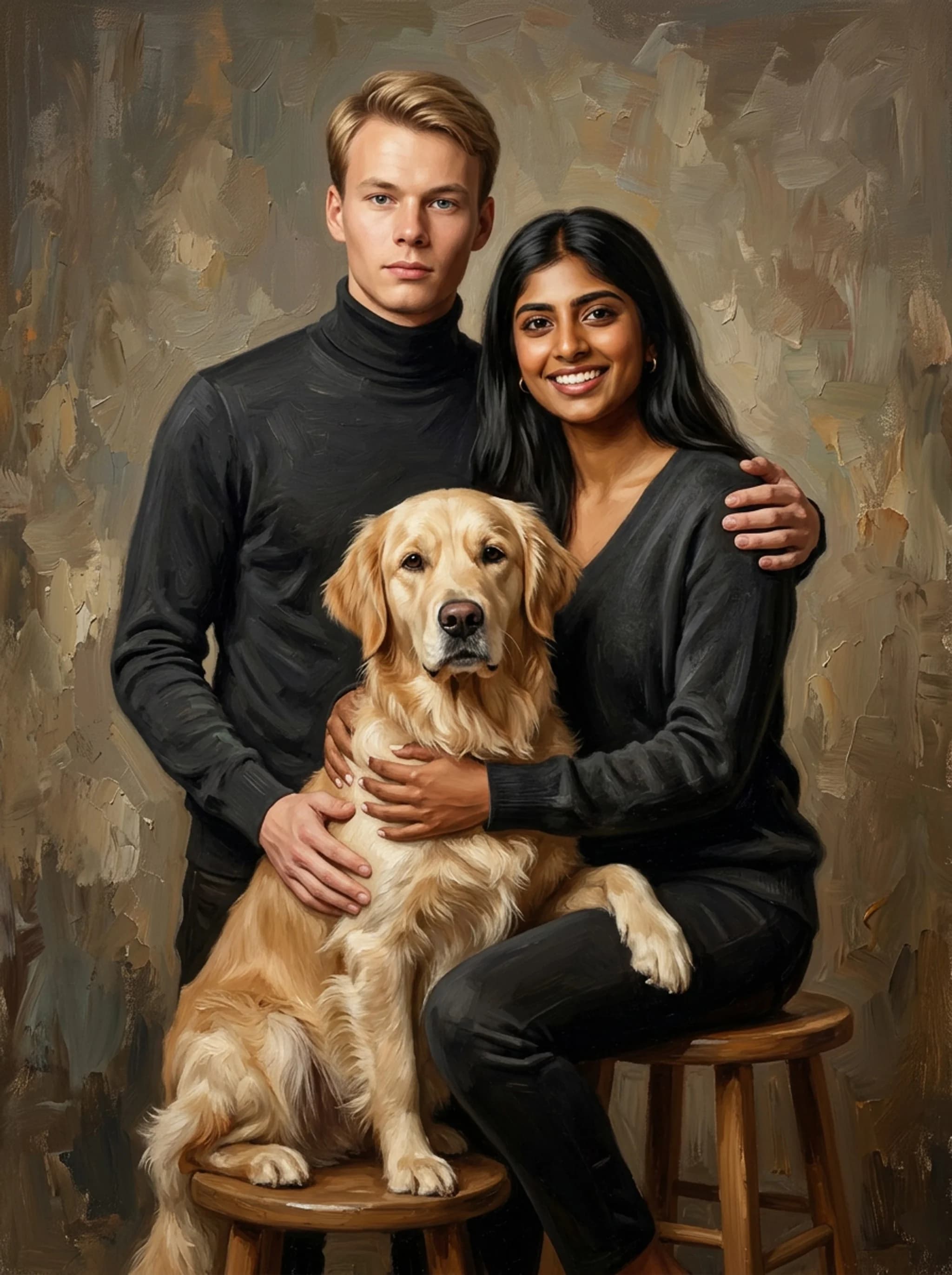
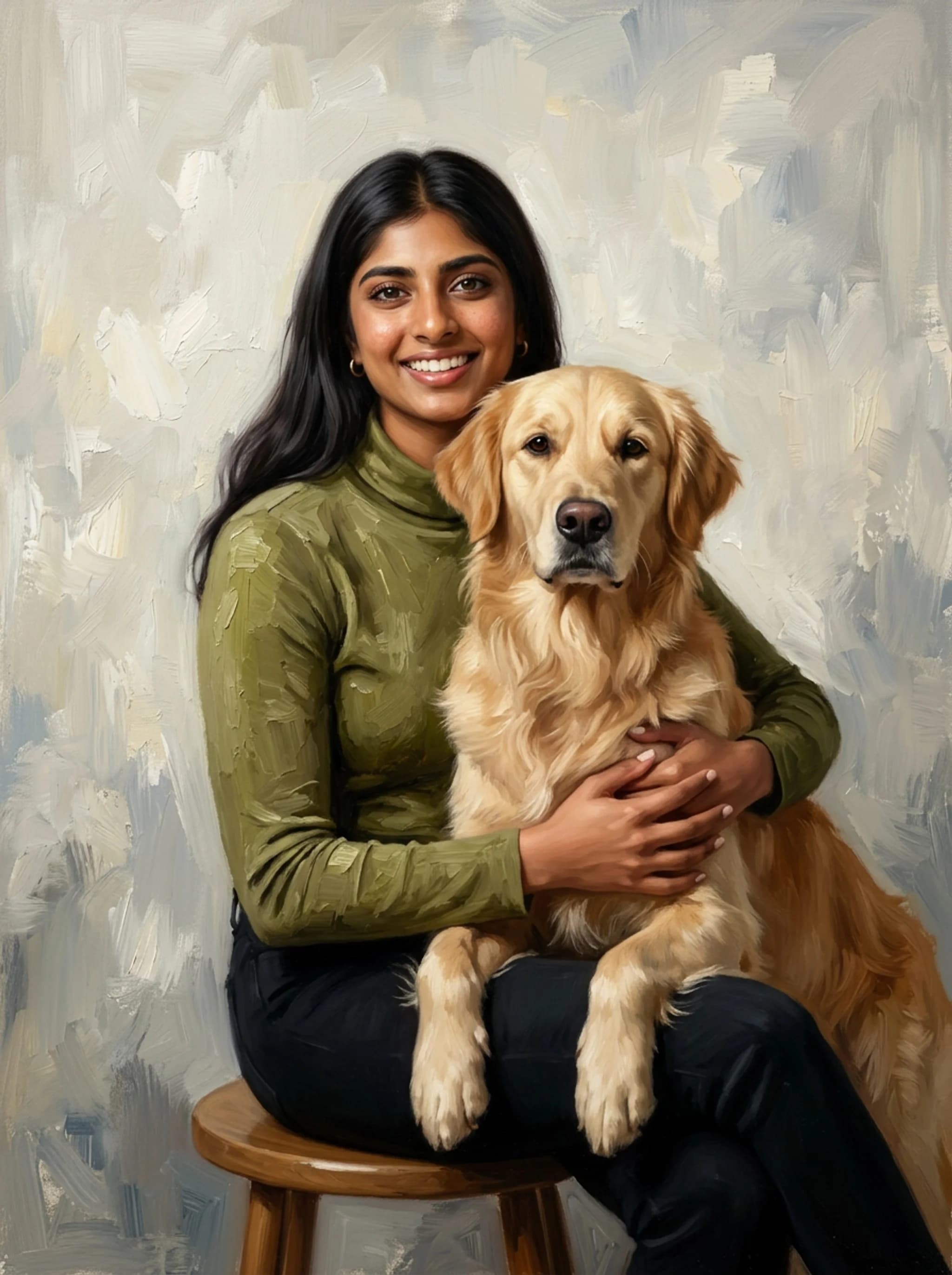
You're staring at a blank wall, picturing your family's best moments transformed into a timeless piece of art. But how do you go from a digital photo to a stunning canvas family portrait that truly captures your essence? It's a common challenge, with so many options and quality considerations that can make the process feel overwhelming. This guide cuts through the noise, giving you a clear roadmap to selecting, creating, and displaying canvas portraits that you'll cherish for years.
Comparison of Top Online Canvas Portrait Providers (2026)
Entity
Smallest Canvas Print Price
Art Style
Preview Available
Shipping Cost
getnobly.com
from $59 (for 20x24 inch)
Personalized oil paintings (AI)
Yes, free in 30-60 seconds
Free
PaintYourLife
$195 (8x10 inch)
Oil, Acrylic, Watercolor, Pastel, Charcoal, Black Pencil
This table compares key features and pricing for leading online canvas portrait services, based on current web sources checked at publication.
What Makes a Great Canvas Family Portrait?
It's more than just printing a photo; a great canvas family portrait turns a snapshot into an heirloom. It captures emotion, tells a story, and becomes a focal point in your home, demanding attention and sparking conversation. The best pieces aren't just pictures; they're expressions of connection, warmth, and personality that resonate deeply with anyone who sees them.
Practical rule: Prioritize emotion and story over technical perfection when selecting your base photo.
Choosing the Right Image: Beyond Just a Smile
When you're sifting through hundreds of photos, don't just look for everyone smiling perfectly at the camera. Focus on genuine interactions, candid moments, and expressions that reflect your family's true dynamic. Think about the overall mood you want to convey; a serene landscape with your family in the foreground can be just as powerful as a close-up shot. Consider the context of the photo. Is it from a special vacation, a family celebration, or just a typical day that holds significant meaning? The story behind the image adds immense value to the final canvas. For personalized oil paintings, Nobly offers free previews in 30-60 seconds, letting you quickly visualize how different photos might translate into art, which can be incredibly helpful in making that final selection.
Understanding Canvas Finishes: Matte, Semi-Gloss, and Glossy
The finish of your canvas significantly impacts how the image is perceived and its longevity. You've got three main choices: matte, semi-gloss, and glossy. - Matte: This finish has no sheen, reducing glare and reflections. It gives the portrait a softer, more artistic look, often preferred for fine art reproductions. It can make colors appear slightly muted but offers a classic, gallery-like feel.
**Semi-gloss**: A popular middle ground, semi-gloss offers a subtle sheen that enhances color vibrancy without excessive reflection. It's a versatile choice that works well for most family portraits, providing a good balance between artistic appeal and photographic detail.
**Glossy**: This finish has a high shine, making colors pop and details appear crisp. It's excellent for vibrant, high-contrast images but can be prone to glare in brightly lit rooms. Each finish has its place; think about your viewing environment and the desired aesthetic before committing.
Quality Considerations: Giclée, Stretcher Bars, and Longevity
Not all canvas prints are created equal. Look for Giclée printing, a high-quality inkjet printing method that uses archival pigment-based inks, providing superior color accuracy and fade resistance for decades. This isn't just a marketing term; it's a standard for fine art reproduction. The stretcher bars, the wooden frame the canvas is wrapped around, are also crucial. Common depths are 0.75 inches for a lighter profile and 1.5 inches for a more substantial, gallery-wrap look. Thicker bars prevent warping over time and give the canvas a more robust appearance. Services like PaintYourLife and PortraitFlip focus on hand-painted options, which often come with their own quality standards for materials and artistic execution.
How Do Photographers Optimize for Canvas Printing?
If you're a photographer, or working with one, optimizing an image specifically for canvas printing requires attention to composition, resolution, and color management. It's not just about getting a good shot; it's about preparing that shot to look its best on a textured, wrapped surface. This preparation ensures your client gets a stunning final product that lives up to their expectations. > Transforming digital memories into a timeless canvas family portrait requires prioritizing emotion and considering quality beyond just price.
Practical rule: Always shoot with the final canvas wrap in mind, leaving 'bleed' space around your subjects.
Composition for Canvas Wrap Types
When composing your shot, think about how the image will wrap around the stretcher bars. With a gallery wrap, the image extends onto the sides of the frame. This means you need to ensure important elements aren't too close to the edges, or they'll be lost. A good rule of thumb is to leave an extra 2-3 inches of 'bleed' space around your main subjects. Some canvas printers offer mirror wrap (where the edge is a mirrored reflection of the image's border) or color wrap (a solid color edge). While these can save you from losing critical parts of the image, planning for a gallery wrap from the start gives you the most flexibility and a truly finished look.
Resolution and File Formats for Large Prints
For large canvas prints, resolution is paramount. You'll want files that are at least 300 DPI (dots per inch) at the final print size to avoid pixelation. This often means working with RAW files or high-quality JPEGs. Don't rely on simply upscaling a low-resolution image; it rarely yields good results. When preparing files, save them as high-quality JPEGs or TIFFs. TIFFs are often preferred by professional printers because they're lossless, meaning they retain all image data without compression artifacts. Services like MPIX, known for their professional print quality, will often have specific file requirements you should adhere to.
Color Space, ICC Profiles, and Post-Production Tips
Managing color is critical. Shoot in sRGB if you're not an experienced printer, as it's the most common color space. For professional work, Adobe RGB offers a wider gamut, but you must ensure your printer can handle it and that you're working with properly calibrated monitors. Using ICC profiles provided by your canvas printer helps ensure color accuracy from screen to print. In post-production (using tools like Adobe Photoshop or Lightroom), focus on subtle sharpening, especially for canvas, which can slightly soften details. Adjust contrast and saturation carefully, as canvas material can absorb light differently than photo paper. Always do a test print if possible, or use soft proofing with the printer's ICC profile to preview how colors will appear. Nobly's AI-powered personalized oil paintings offer a unique approach, transforming photos into painted styles rather than direct photographic prints, which can simplify some of these technical printing considerations.
Your bond, painted in oil.
Upload one photo and see your portrait in 60 seconds. Free preview, no account needed.
Creating a Stunning Multi-Canvas Family Portrait Wall
A single canvas is great, but a well-designed multi-canvas wall can transform an entire room, creating a dynamic and cohesive display of your family's story. It's about more than just hanging multiple prints; it's about creating a curated art installation that draws the eye and evokes emotion. Planning is key here, from selecting the right canvases to precise spacing.
Practical rule: Always lay out your canvas arrangement on the floor first before putting holes in your wall.
Layout Templates and Spacing Rules
Forget haphazard arrangements. Start with a plan. You can find numerous layout templates online, from symmetrical grids to more organic, flowing designs. Print out paper templates of your canvas sizes and tape them to the wall to visualize the arrangement before you commit. As for spacing, a general rule of thumb is to leave 2-4 inches between canvases. Too close, and they blend into one; too far, and they look disconnected. Aim for visual balance. For example, a large central canvas flanked by two smaller ones creates a strong focal point. Custom Portrait from Photo: A Founder's Guide to Quality and offers more insights into creating impactful displays.
Anchor Points and Visual Weight Strategies
Every gallery wall needs an anchor point, a central piece that everything else radiates from. This is often the largest canvas or the one with the most significant image. Once your anchor is placed, use it as a reference for aligning other pieces. Think about the visual weight of each canvas. Darker, more detailed images carry more weight than lighter, simpler ones. Balance these elements across your display. For example, if you have a very detailed portrait on one side, balance it with a similarly weighted piece (not necessarily the same size) on the other to create harmony.
Interactive Tools for Wall Visualization
Visualizing how different canvas sizes and arrangements will look on your specific wall can be tricky. Several online tools can help. Many canvas printing sites, like CanvasPop, offer basic visualization tools. However, more advanced apps or websites let you upload a photo of your actual wall and then drag and drop different canvas sizes and arrangements onto it. This is a game-changer for avoiding mistakes and ensuring you love the layout before drilling holes. Some also let you input your wall dimensions for more accurate scaling. This kind of tool can save you a lot of headache and extra work.
Comparing Canvas Printing Services: Who to Trust?
Choosing the right canvas printing service can feel like a minefield, with so many options promising the best quality and price. It's not just about the cheapest deal; it's about finding a provider that consistently delivers on quality, offers the finishes you want, and provides reliable service. We’ve pulled some data to help you cut through the noise and make an informed decision.
Practical rule: Don't just look at price; consider the average customer sentiment and range of options.
The Canvas Printer Comparison Matrix
To help you navigate the landscape, we've compiled a comparison of several leading online canvas printing services, focusing on metrics beyond just price. This gives you a broader picture of who's investing in their presence and how customers generally perceive them. | Service | Avg. Ad Spend (last 12 mos.) | Est. Domain Authority | Avg. Customer Sentiment | Canvas Sizes Offered | Available Finishes |
------------------
-----------------------------
-----------------------
-------------------------
----------------------
--------------------
CanvasPop
High
70-80
4.5/5
Wide range
Matte, Semi-gloss, Glossy
Shutterfly
Very High
85-90
4.0/5
Standard to Large
Matte, Semi-gloss
Mpix
Moderate
65-75
4.7/5
Professional range
Lustre, Metallic (photo paper, not canvas specific)
Snapfish
High
75-85
3.8/5
Standard
Matte, Semi-gloss
| Costco Photo | Low to Moderate | 90+ | 4.2/5 | Standard | Matte, Semi-gloss | Note: Customer sentiment is an aggregation from various review platforms; Ad Spend is an estimate from current web sources, checked at publication. Mpix is primarily a photo printer, but their quality is notable.
Beyond the Big Names: Etsy and Specialized Artists
While big players like Shutterfly and Snapfish offer convenience, don't overlook platforms like Etsy. Here, you'll find independent artists and smaller print shops offering unique styles, often with a more personal touch. For example, Etsy (various sellers) has canvas options starting from $91.95 for a 164-review item, showcasing a range of styles from oil to digital. You might discover a niche style like Renaissance or Rococo that perfectly fits your vision. Then there are specialized services like Nobly, which creates personalized portraits that look like real paintings from your photos, transforming them into unique artworks with pets, family members, or as couple portraits. They focus on artistic interpretation rather than direct photo reproduction, offering a distinct aesthetic if you're looking for something beyond a standard print. Welham & Co also offers artist-made portraits, starting at $79 for an 8x10 inch, with a free proof in 1-3 days.
Sustainability and Environmental Impact
As consumers, we're increasingly aware of the environmental footprint of our purchases. When choosing a canvas printer, ask about their sustainability practices. Do they use ethically sourced wood for stretcher bars? Are their inks eco-friendly? Do they minimize waste in their production process? Some companies are transparent about using recycled materials or carbon-neutral shipping. It's not always easy to find this information, but a quick check on a company's 'About Us' or 'Sustainability' page can reveal a lot. Supporting businesses that prioritize environmental responsibility contributes to a healthier planet.
Maintaining Your Canvas Portrait for Years to Come
Once your canvas family portrait is hanging beautifully on your wall, you want to ensure it stays that way for decades. Proper maintenance and cleaning aren't complicated, but they are crucial for preserving the vibrancy and integrity of the artwork. A little care goes a long way in protecting your investment.
Practical rule: Dust regularly with a soft, dry cloth; avoid harsh chemicals or direct sunlight.
Cleaning and Dusting Best Practices
The simplest cleaning method is regular dusting. Use a soft, dry microfiber cloth or a feather duster to gently wipe the surface of the canvas. Don't use abrasive materials or paper towels, as they can scratch the surface or leave fibers. For more stubborn dust or light smudges, a slightly damp, clean cloth can work, but make sure it's barely moist and follow up immediately with a dry cloth. Never use harsh chemical cleaners, glass cleaners, or solvents on your canvas. These can damage the inks, coatings, or even the canvas material itself. If you have a significant stain or damage, it's best to consult a professional art restorer rather than attempting to fix it yourself.
Protecting Against Environmental Damage
The environment where your canvas hangs plays a huge role in its longevity. Avoid hanging canvas portraits in direct sunlight, which can cause colors to fade over time, even with archival inks. High humidity can lead to warping of the stretcher bars or even mold growth on the canvas. Keep your portraits away from heat sources like radiators or fireplaces, which can cause drying and cracking. Aim for a stable environment with moderate temperature and humidity. Think about where you'd store other valuable art pieces; your canvas portrait deserves the same consideration.
When to Consider Professional Restoration
For significant damage like tears, deep scratches, water damage, or extensive fading, professional restoration is your best bet. A qualified art restorer has the expertise and tools to repair your canvas without causing further harm. Don't try to patch tears with tape or paint over faded areas yourself; you could inadvertently reduce the value or make the damage irreversible. While it's an investment, professional restoration can bring a cherished family portrait back to life. > A canvas family portrait is more than decor; it's a visual legacy, and treating it as such ensures it lasts for generations.
FAQ
What's the best canvas size for a family portrait?
The best canvas size depends on your wall space and the number of people in the portrait. For a small family, a 16x20 or 20x24 inch often works well, while larger families or focal pieces might need a 24x36 inch or bigger. Always measure your wall first.
How do I create a canvas family photo wall?
Start by selecting a mix of canvas sizes and shapes, then lay them out on the floor to find a pleasing arrangement. Use paper templates on your wall to finalize the layout and ensure proper spacing (2-4 inches between canvases) before hanging.
Can I turn any photo into a canvas family portrait?
While you can technically print any photo, high-resolution images (at least 300 DPI at print size) with good lighting and composition will yield the best results. Blurry or low-resolution photos will look pixelated on a large canvas. Services like Nobly specialize in artistic transformations, which can sometimes enhance less-than-perfect photos.
What's the difference between a canvas print and a painting on canvas?
A canvas print is a photographic image digitally printed onto canvas material. A painting on canvas, like those offered by PaintYourLife or Nobly, is an actual artwork created by an artist (either human or AI-assisted) directly on canvas, giving it a unique texture and artistic interpretation.
How much does a canvas family portrait cost?
Prices vary widely based on size, quality, and service. For example, Instapainting offers a 12x12 inch mixed-media rolled canvas from $55, while PaintYourLife starts at $195 for an 8x10 inch oil painting. Nobly offers 20x24 inch personalized oil paintings from $59. Digital-only options are typically less expensive than framed canvas prints.
Your bond, painted in oil.
Upload one photo and see your portrait in 60 seconds. Free preview, no account needed.