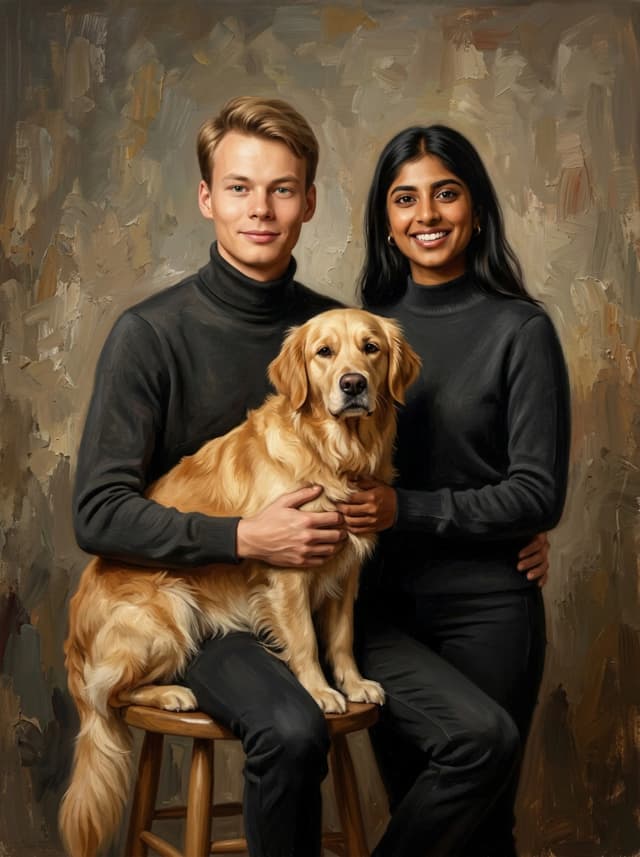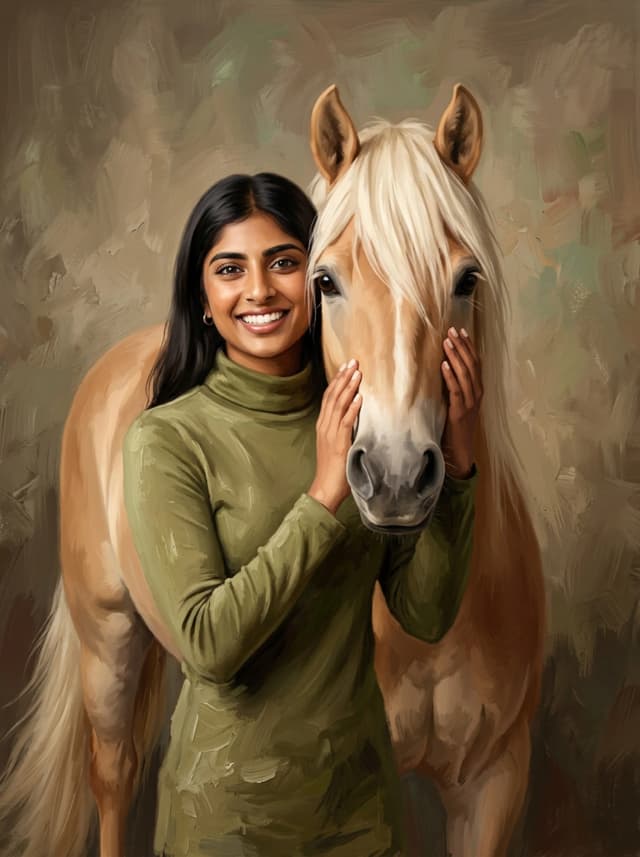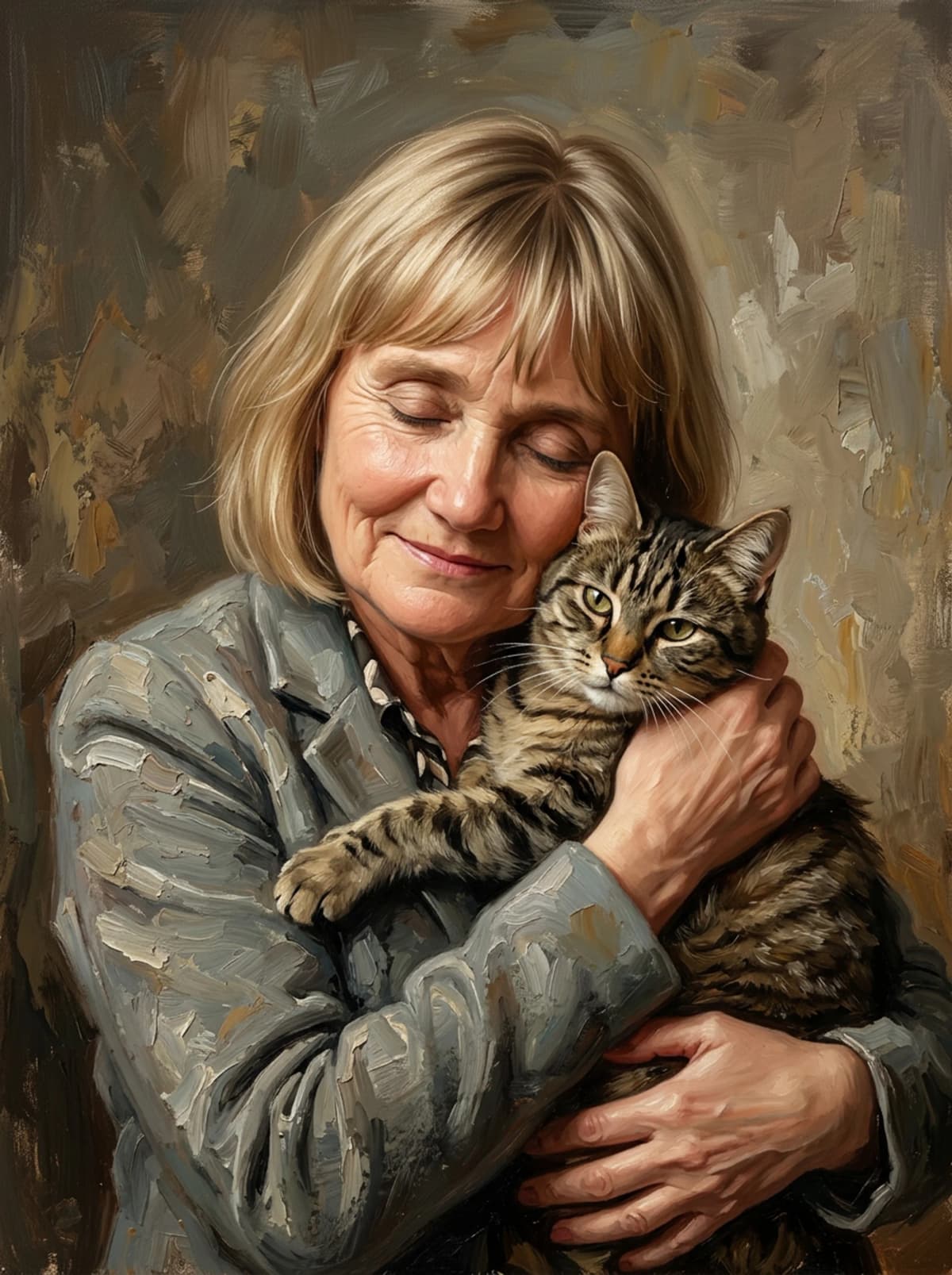
This is an opinion piece and I'm not going to pretend otherwise. I've thought about this a lot, more than is probably healthy, because I've lived through pet loss and I've tried every memorial option out there. The paw print clay kit (it cracked). The engraved garden stone (it sank into the mud). The shadow box with the collar and a photo (it sits in a closet because looking at it hurts too much).
The portrait is on my wall. I look at it every day. And it doesn't hurt. It makes me smile.
That difference is the whole point of this piece.
Photos Freeze Grief. Portraits Transform It.
Here's what I've noticed about looking at photos of a pet who's passed: every photo is a time machine to a specific moment you can never go back to. The photo of them on the beach, you remember that day, and then you remember they'll never have another day like it. The photo of them sleeping on the couch, you remember the warmth, and then you remember the couch is empty now.
Photos are precise. And that precision is a knife.
A portrait does something fundamentally different. It doesn't capture a moment. It captures an essence. The painting on my wall doesn't remind me of a specific Tuesday. It reminds me of all the Tuesdays. It's not "them on that day." It's just them. The whole of them, distilled into something permanent and beautiful.
The classical style specifically adds something photos never can: dignity. Grandeur. The sense that this creature, this specific dog, this specific cat, was significant. Not in a kitschy "pet angel" way. In a Rembrandt way. In a "this being mattered and here is the proof" way.
The Science of Why This Works
There's research on this, actually. Studies on grief and visual processing show that realistic images of the deceased (in human bereavement, but the principle applies) can trigger acute grief responses because they activate specific episodic memories. Artwork, paintings, drawings, stylized representations, activates more generalized emotional associations. The grief is still there, but it's integrated rather than acute.
In simpler terms: a photo says "they're gone." A portrait says "they were here."
Both are true. But one of them lets you breathe.
Why Other Memorials Fall Short
I'm not saying other memorials are bad. I'm saying they're incomplete.
**Urns and ashes**, meaningful, but you can't look at an urn and see your pet. It's a container, not a connection.
**Paw prints**, the idea is lovely. The execution is usually disappointing. Clay cracks. Ink prints smear. And even a perfect paw print doesn't show you their face.
**Garden stones**, beautiful for a while, then they weather. They're also outside, which means the memorial is something you visit, not something you live with.
**Jewelry**, thoughtful, but private. Nobody else sees it. A portrait on the wall is a public declaration: this animal was part of this household and their presence is still honored here.
**Photo collages**, see my earlier point about photos. A collage is just more knives.
The "But It's Not Hand-Painted" Objection
I hear this one a lot. And I get it, there's something about a human artist sitting with a photo of your pet and translating it by hand that feels more respectful, more intentional.
But here's what I'll say: the value of a memorial is in what it gives you, not in how it was made. If an AI-generated portrait on fine art paper makes you feel the same warmth, the same connection, the same quiet joy when you look at it, then the process is irrelevant. What matters is the result on your wall and what it does to your heart when you see it.
A traditional hand-painted commission that takes six weeks is wonderful if you have the budget and patience. An archival print that arrives in days and looks just as stunning on the wall is wonderful too. The pet doesn't know the difference. What matters is that you honored them.
What Happens When You Hang It
Something shifts. I can't fully explain it. The empty space on the wall becomes their space. You walk past it in the morning and instead of the gut-punch of absence, you get a small, warm recognition. "Hey. There you are."
Guests notice it. They ask about it. And suddenly you're telling the story of your pet, not the story of their death, but the story of their life. Who they were, what they were like, why they mattered. The portrait becomes a conversation starter that keeps their memory active and present.
That's what a memorial is supposed to do. Not freeze you in grief. Not hide the loss in a drawer. But give the love somewhere to live.
The Hill I'm Dying On
Every pet deserves to be remembered as more than a phone photo buried in a camera roll. They deserve to be on a wall, in warm light, looking back at you with those eyes that only they had. A portrait does that. Nothing else does it as well.
That's my hill. I'm comfortable here.