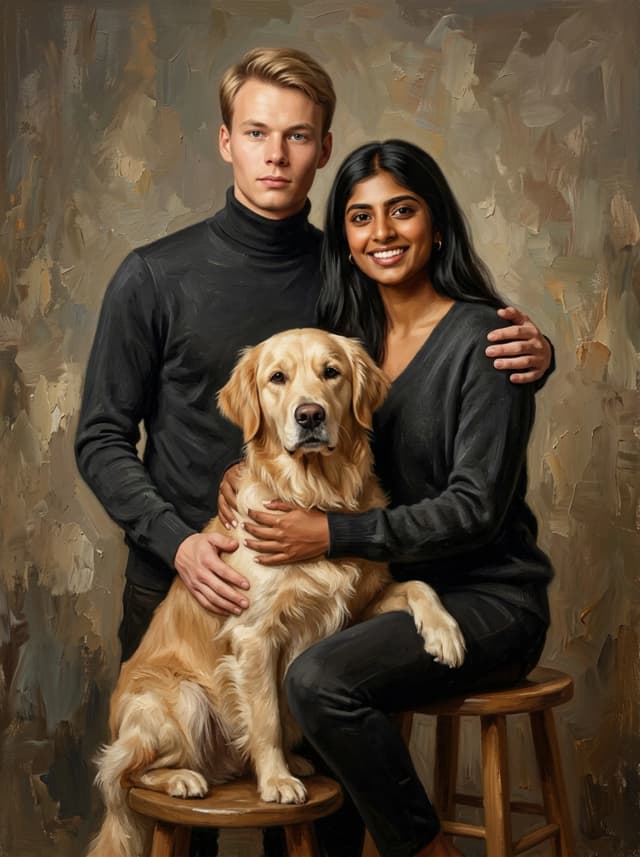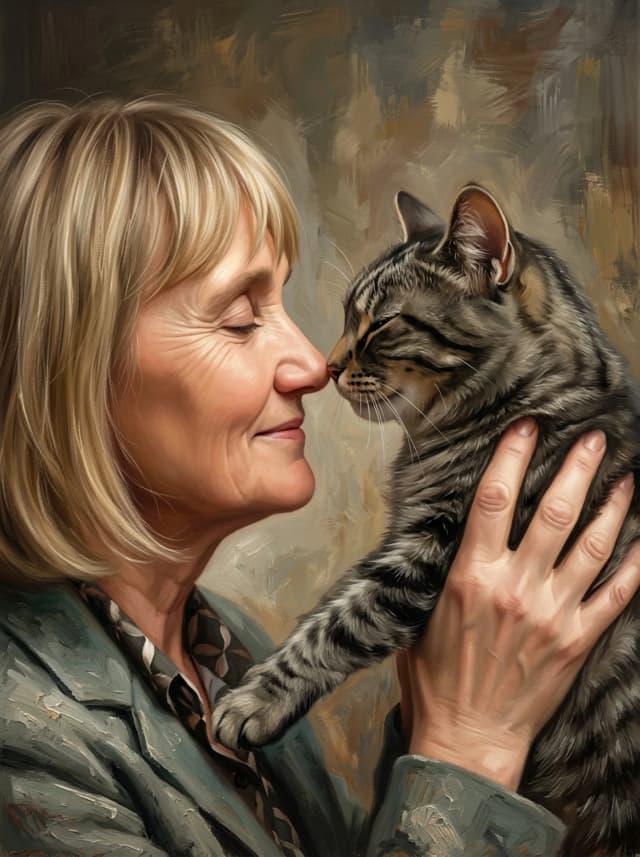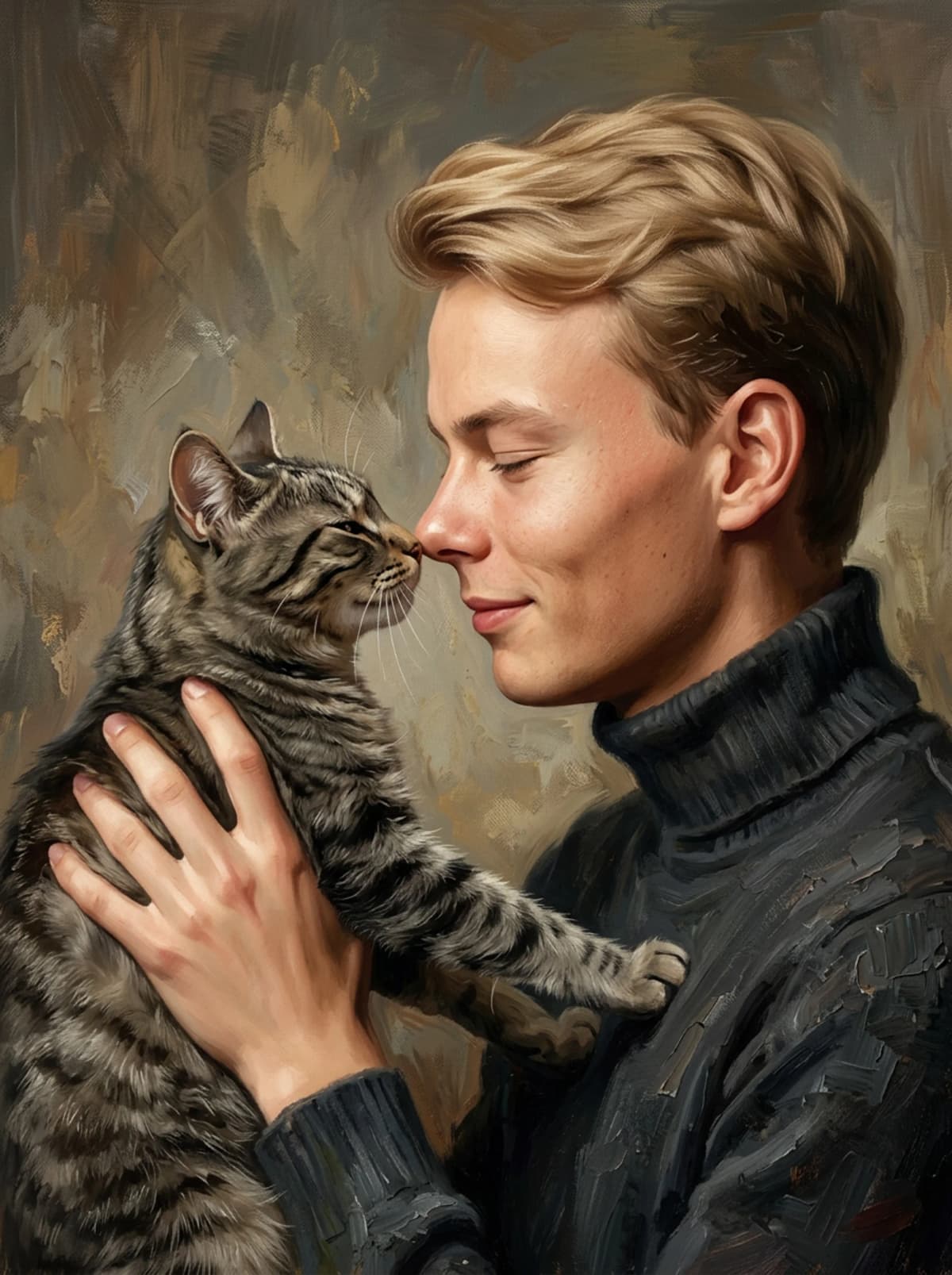
There's a gap between "photo with a painting filter" and "this actually looks like it was painted." The difference comes down to four specific techniques that Old Masters used and cheap apps don't.
Impasto: Visible Brush Texture
Real oil paintings have physical texture. You can see the ridges left by the brush, the thick buildup of paint in highlights, the thinner layers in shadows. This isn't decoration, it's how the painting interacts with real light. Highlights are raised. Shadows are smooth. Our portraits replicate this texture digitally, and it's one of the main reasons they read as "painted" rather than "filtered."
Glazing: Depth Through Layers
Old Masters built color through thin, translucent layers of paint applied one over another. This creates a luminous depth, light passes through the upper layers, bounces off the ones below, and the color seems to glow from within. You see this most in the eyes. A flat, opaque eye looks digital. A glazed eye looks alive.
Chiaroscuro: Drama Through Contrast
Strong directional light. Deep shadows. One side of the face illuminated, the other falling into darkness. This creates three-dimensionality and focus. The eye goes where the light is. Everything else recedes.
Sfumato: Soft Edges
Sfumato, a gradual dissolution where fur bleeds into shadow and the boundary becomes atmospheric rather than sharp.
Leonardo da Vinci pioneered this. Look at the Mona Lisa's edges, they're soft, almost smoky. When applied to pet portraits, sfumato is what makes a pet look like it was painted in the scene, not cut and pasted into it.
Why All Four Matter
Remove any one of these and the illusion breaks. Impasto without sfumato looks crude. Glazing without texture looks digital. All four working together is what creates a portrait that feels painted, with weight, warmth, and the kind of presence that only oil paintings have.