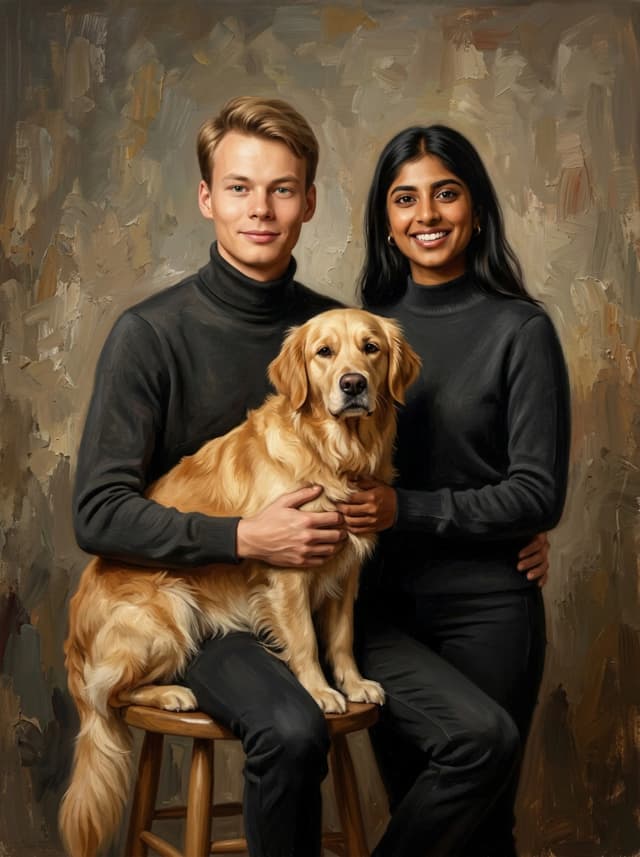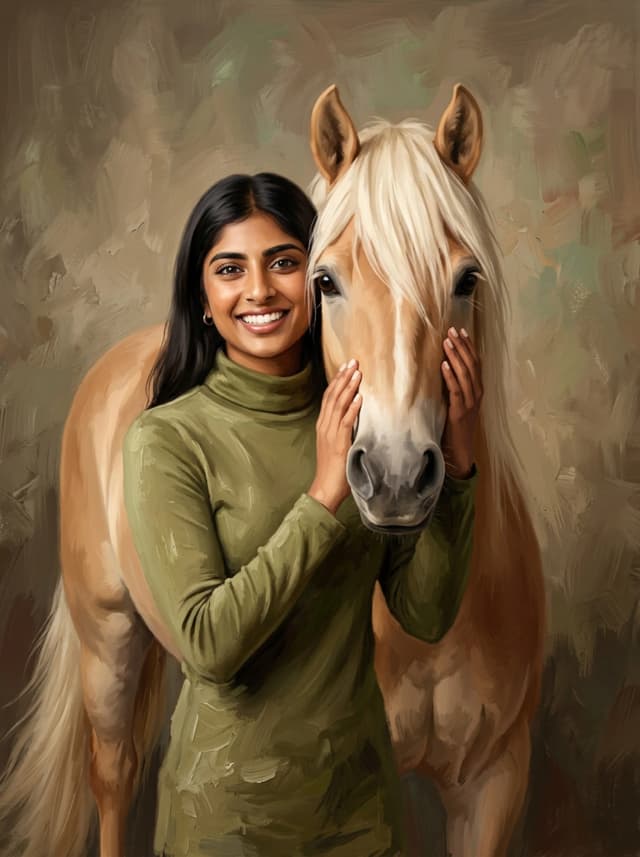
After we lost our dog, his corner of the living room just looked wrong. Empty bed, bare floor, nothing. My partner suggested moving furniture to fill the space. I suggested something different, making that wall his.
A pet memorial wall isn't a shrine. It's not sad or morbid. It's a deliberate decision to keep their presence visible in your home, to give the memory a physical place instead of letting it drift. Here's how to do it in a way that feels right.
The Single Statement Piece
The simplest approach, and often the most powerful. One large portrait, 16×20" or 20×24", centered on a wall. No clutter around it. Just them.
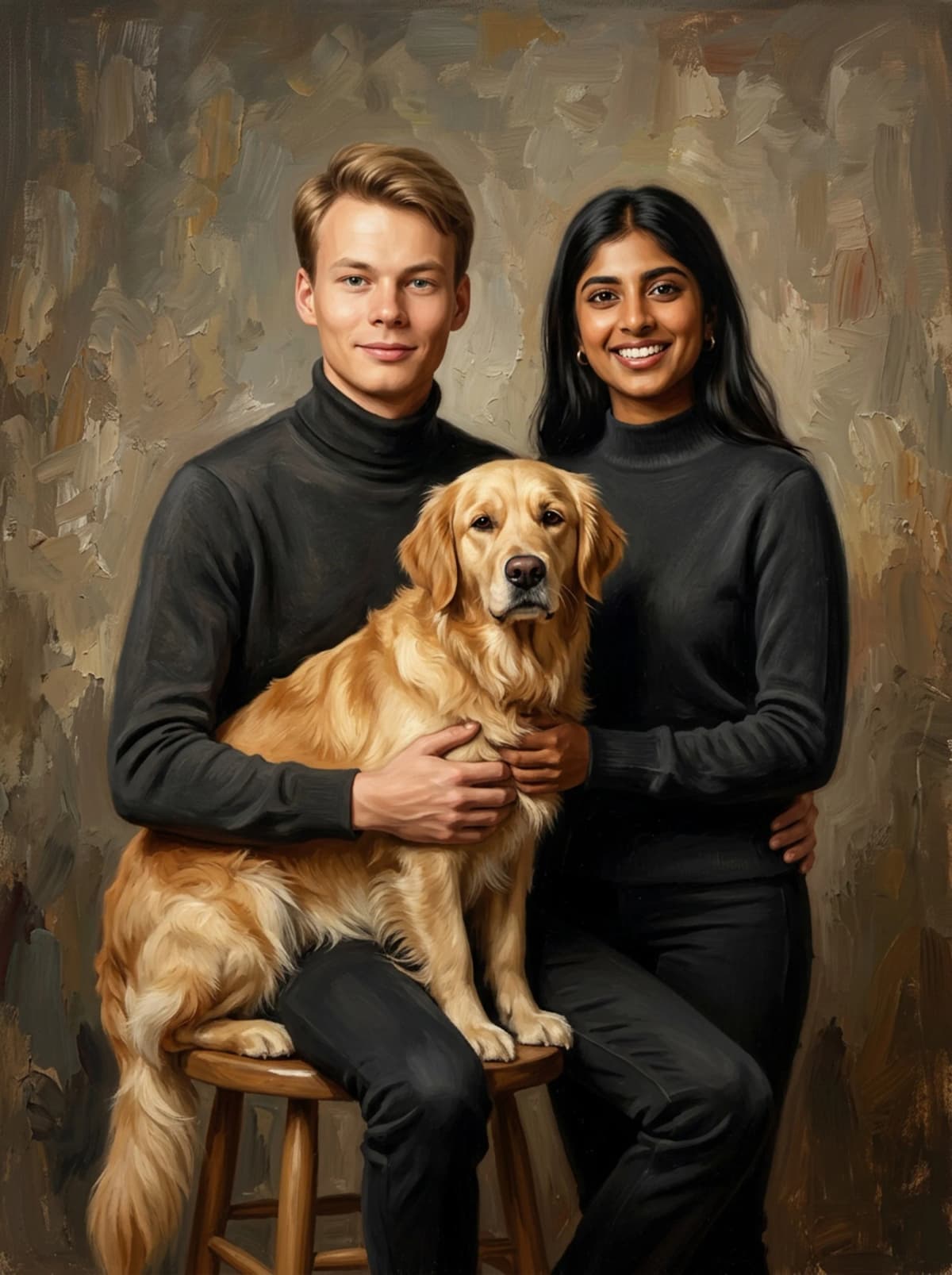
This works best when the portrait itself has enough visual weight to hold the space. An oil-style oil painting in warm tones against a deep background has that kind of gravity. It doesn't need anything else around it. It commands the wall.
Hang it at eye level, slightly above center. You want it to catch your eye naturally when you enter the room, not something you have to look up to find.
The Gallery Wall
If you've had multiple pets over the years, or if you want to tell a fuller story, a gallery wall lets you mix different elements together. The key is cohesion, you want it to look intentional, not like a random collection of frames.
**Start with the portrait as the anchor.** Place the largest piece slightly off-center or at the focal point, then build around it with smaller elements.
**Mix media thoughtfully.** A painted portrait alongside a few favorite photographs, maybe a framed paw print, a small shelf holding their collar. The contrast between a formal portrait and a candid photo is actually beautiful, it shows both who they were in their best light and who they were on a regular Thursday.
**Keep the frames consistent.** You can mix sizes, but stick to one or two frame colors. Black and natural wood work well together. Matching frames create visual calm, which is what you want, this should feel peaceful, not chaotic.
**Leave breathing room.** Don't pack frames edge to edge. Gallery walls work best with 2-3 inches between pieces. The white space lets each element have its moment.
The Memorial Shelf
Not technically a wall, but it works with one. A floating shelf beneath or near the portrait holding a few meaningful items: their collar, a favorite toy, a small plant. Keep it minimal. Three to five items maximum. This isn't about displaying everything they owned, it's about choosing the few things that capture who they were.
A candle on the shelf gives you something to light on hard days. Small rituals like that give grief somewhere to go.
Mixing Photos With Portraits
This is my favorite approach. Photographs are specific, they show a moment, a place, a day. Portraits are essential, they show the soul of the animal across all the moments. Together, they tell a complete story.
Place the portrait centrally. Surround it with three to five of your favorite photographs. Choose photos that show different sides of them: the goofy side, the peaceful side, the adventurous side. The portrait anchors it all with dignity.
Where to Put It
**Near where they lived.** If they had a favorite room or spot, that wall carries extra meaning.
**In a hallway.** Hallways are underused spaces, and a memorial gallery in a hallway means you walk past it daily, a quiet, daily moment of remembrance without it dominating your main living space.
**In your bedroom.** More private. Some people prefer this because the memorial feels personal, not performative.
**Avoid high-traffic chaos zones.** The entryway where everyone dumps their keys and coats isn't the right energy. You want somewhere with a natural pause.
It Doesn't Have to Be Forever
Give yourself permission to change it. Move things around. Add a new photo you found on your phone. Take something down if it's too much on a hard day. A memorial wall is a living thing. It can evolve as your grief evolves. That's not disrespectful, it's honest.