The grief comes first. And then, close behind it, the guilt.
Should I have noticed sooner? Should I have taken them to the vet earlier? Should I have waited longer, or not as long, to make that final call? Should I have been home that day? Should I have done more?
The "what ifs" don't stop. And they're exhausting on top of everything else you're already carrying.
Why the guilt happens
You loved them. You were responsible for them. And now they're gone.
When we lose someone we were supposed to take care of, the mind goes looking for a point where things could have gone differently. It's not rational. It's something the brain does when it can't accept that some things just happen, that loss doesn't always have a fixable cause.
The guilt is also, in a strange way, a form of love. It comes from caring so deeply that you can't stand the idea that they suffered, or that they felt alone, or that they didn't know how much they meant to you.
The truth about that last call
For people who made a euthanasia decision, this is often the sharpest part. "Did I do it too soon? Did I wait too long? Were they in more pain than I knew?"
Here's what I know: you made that decision from love. You were doing the hardest, most selfless thing a person can do for an animal. You were trying to spare them suffering. That is not something to feel guilty about. That is one of the most profound acts of care there is.
Vets who perform euthanasia will tell you: most people wait slightly longer than they needed to, because they can't bear to let go. If anything, the act of making that call usually reflects how much you loved them, not how little.
On the smaller what-ifs
Maybe you weren't home when it happened. Maybe there was a symptom you missed. Maybe there was a last walk you didn't take.
You were a human being living your life. You couldn't have known. You did the best you could with what you knew at the time. That's all any of us can do.
What might help
Talking to your vet, if you have questions about the end. They will usually help you understand that you didn't miss something catastrophic.
Writing down the ways you took care of them, because the guilt tends to erase the good parts. The trips to the vet, the years of daily care, the love. All of that was real.
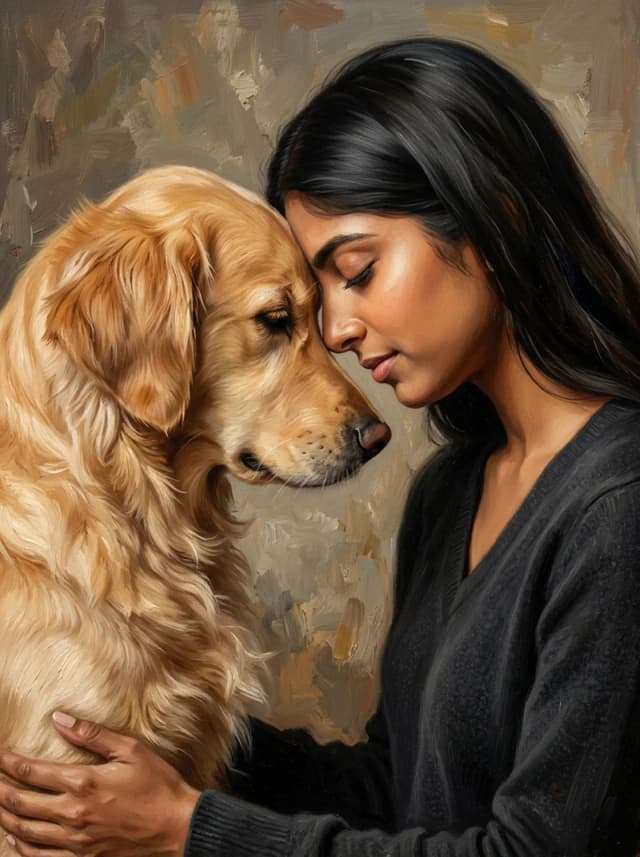
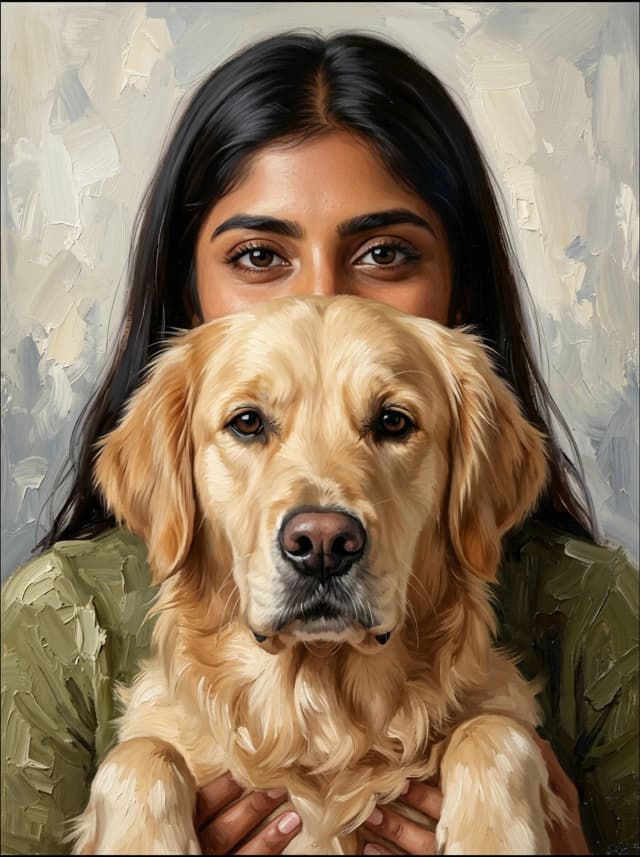
Some people find that memorializing them, with a photo, a portrait, something on the wall, helps shift the feeling from "what did I do wrong" to "what we had was good." The portrait is a way of saying: I see you, I see us, it was real and it was enough.
The guilt doesn't mean you failed them. It means you loved them. Those are not the same thing.