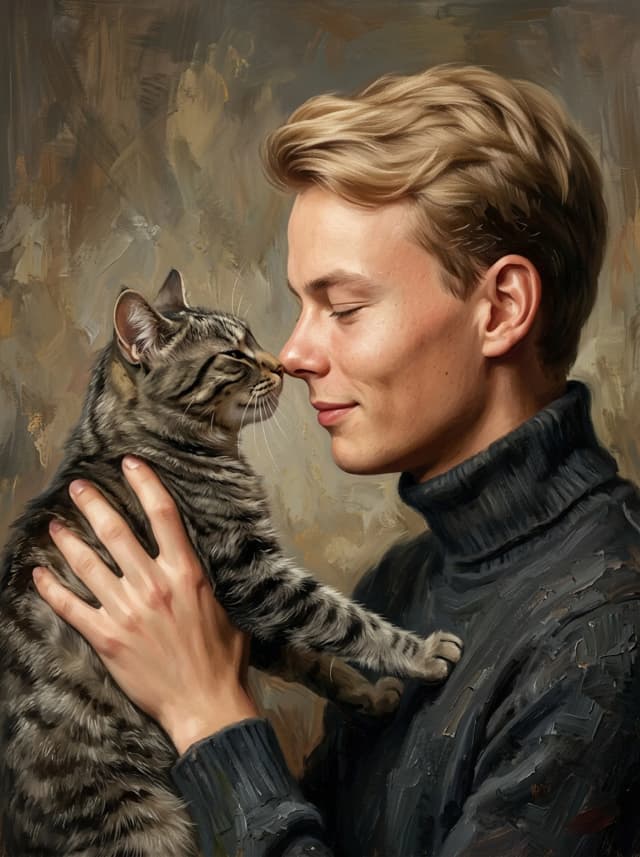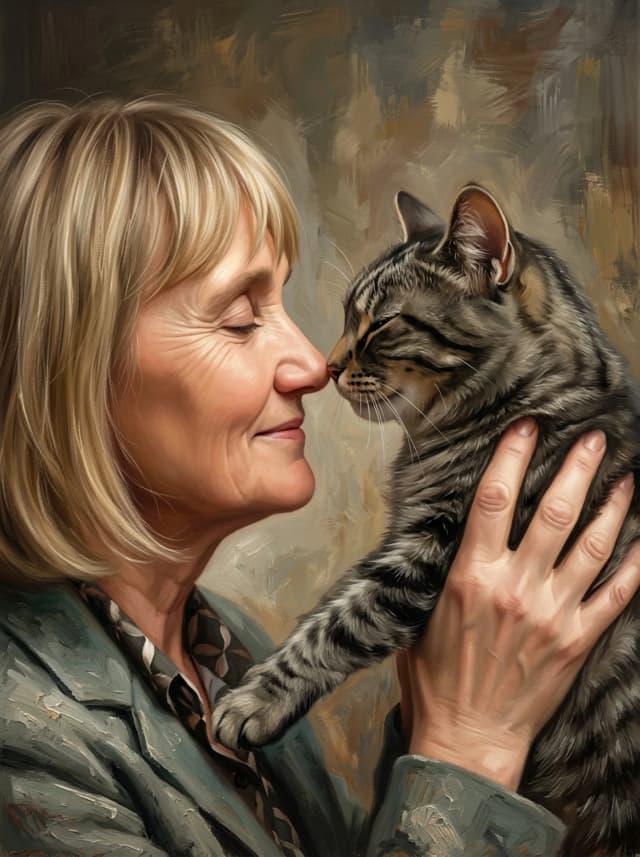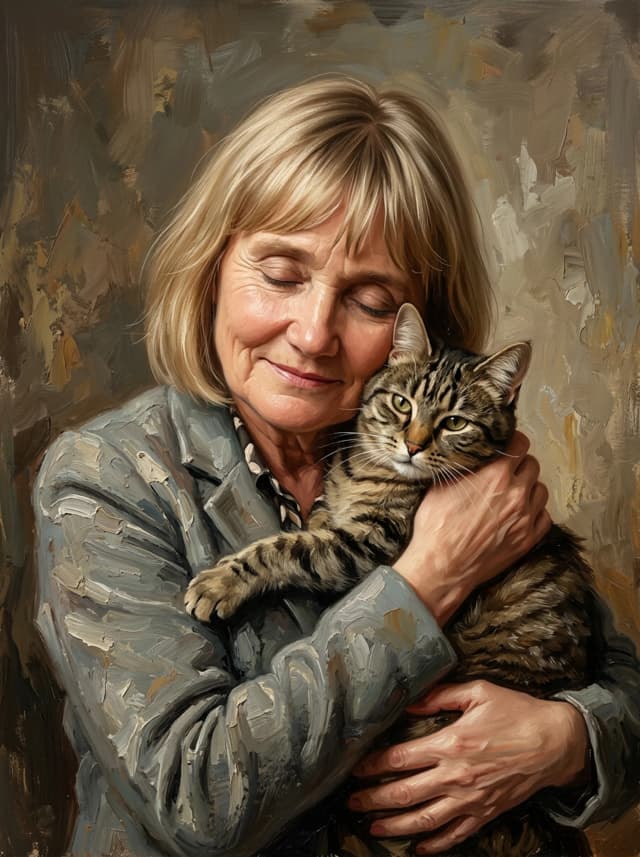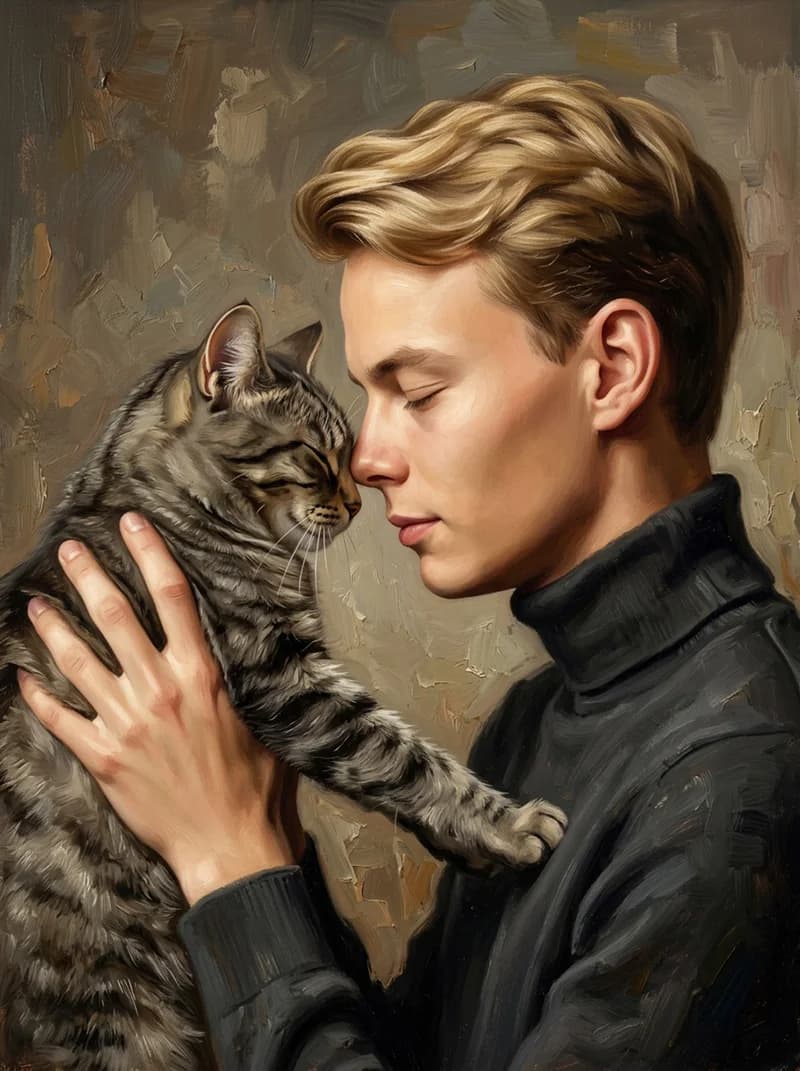
Guinea pigs have been companion animals for a long time. The Inca in South America domesticated them thousands of years ago, keeping them for both practical and ceremonial purposes. Spanish explorers brought them to Europe in the 16th century, where they became popular pets among the wealthy. Queen Elizabeth I reportedly had one. There are European paintings from the 1500s featuring guinea pigs alongside their owners.
So no, a guinea pig portrait is not a novelty. It's actually returning to something that used to be done.
What You're Working With
Guinea pigs, or cavies, come in a wide variety of coat types and colors. There's the smooth-coated American guinea pig, the rosette pattern of the Abyssinian guinea pig, the long flowing hair of the Peruvian, and everything in between. Colors range from solid black, white, cream, and red to multi-color combinations. Some are one solid color; some have dramatic patches.
They typically weigh between 700 g and 1.2 kg and live 4 to 8 years. They're social, vocal, and surprisingly expressive, especially when they want food or attention.
The Portrait
Guinea pig portraits work for the same reason all small animal portraits work: the detail. When you zoom in on a guinea pig's face, there's so much to see. The small rounded ears, the bright dark eyes, the whiskered nose, the texture of the coat. In an oil painting style, all of that comes forward.
Short-coated guinea pigs read as clean and graphic in a portrait. Long-haired varieties have a flowing, almost abstract quality in the fur. Rosette Abyssinians have their fur naturally spiked and swirled, which creates genuine texture.
For the People Who Love Them
Guinea pig owners know: these animals have personalities. They have favorites among their humans. They recognize your voice. They wheek when they hear the fridge open.
That's a pet. That deserves a portrait.
Upload a photo at getnobly.com. Free preview, no commitment.